
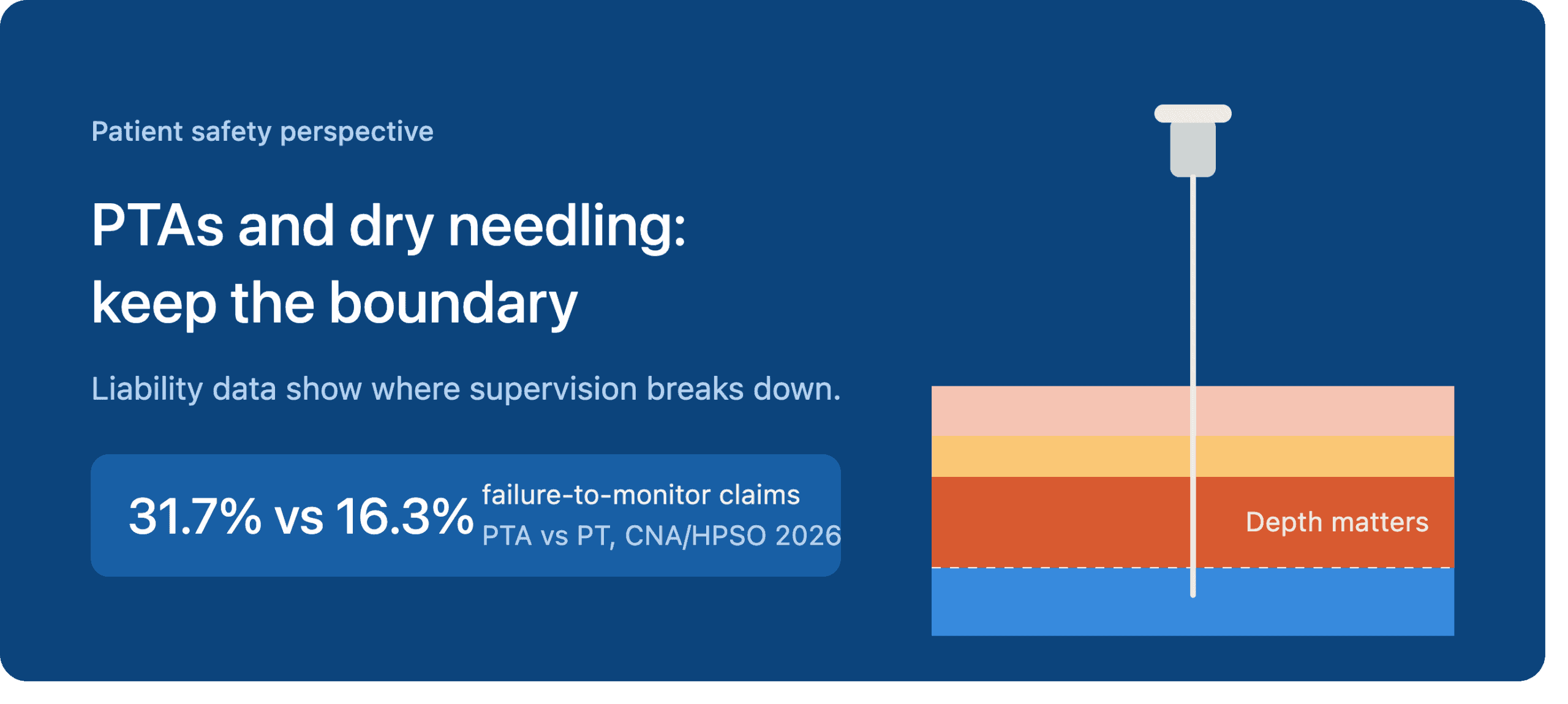
The Maryland Board of Physical Therapy Examiners should reject its proposed expansion of dry needling to physical therapist assistants. PTAs are essential members of rehabilitation teams, but authorizing an invasive intervention requires a convincing patient safety justification. The findings of the 2026 CNA/HPSO Physical Therapy Professional Liability Claim Report, Fifth Edition (1), combined with unresolved questions about training and supervision, do not provide that justification.
The May 29, 2026, proposal by the Maryland PT Board to amend COMAR 10.38.12 would allow appropriately registered PTAs to perform dry needling under ongoing supervision by a PT also registered in dry needling. It also includes a provisional route permitting practice after completing only 10 hours of theory and 10 hours of hands-on dry needling before completion of the full training requirement (2)
The Board’s public protection responsibility should guide this decision. The question is whether the proposed preparation and oversight are sufficient for the clinician inserting the needle to make safe decisions throughout treatment. I have shared my concerns with the Maryland PT Board on several occasions.
What the liability data actually show
The 2026 CNA/HPSO Physical Therapy Professional Liability Claim Report, Fifth Edition, analyzes closed cases from January 1, 2020, through December 31, 2025. “Total incurred” includes both indemnity and claim expenses; it is not simply the amount paid to an injured patient.
PTAs accounted for 16.5% of these claims, compared with 76.5% for PTs, but the average total incurred was $208,546 for PTA claims and $148,507 for PT claims: PTA claims were 40.4% more costly on average.
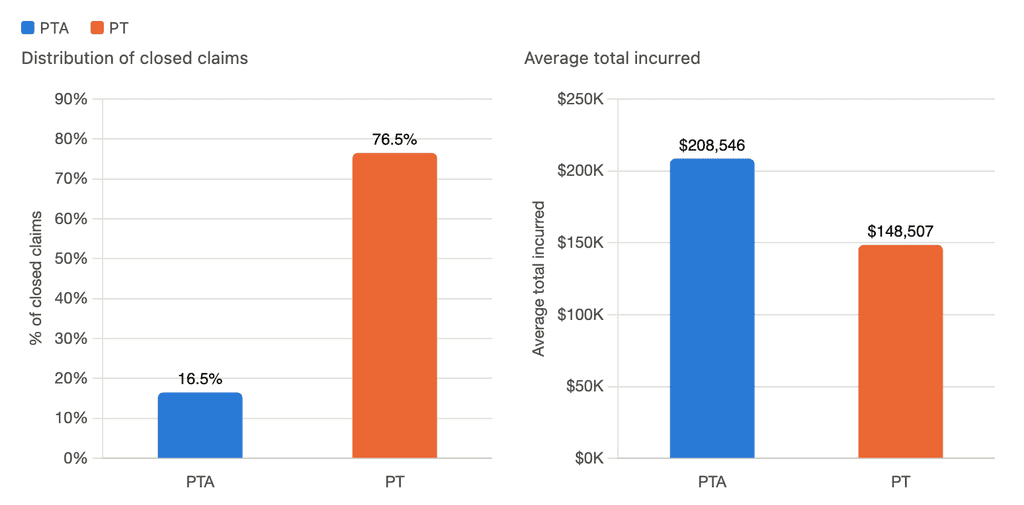
These figures do not mean that PTAs injure patients 40.4% more often. Claim shares are not adjusted for workforce size, treatment volume, patient complexity, or the kinds of interventions performed.
The report identifies significant weaknesses in the very systems on which supervised PTA dry needling would depend, and associates greater PTA claim severity with
- improper delegation by PTs
- inadequate supervision, and
- scope of practice concerns.
While the data do not establish that a proposed scope expansion will cause harm, the numbers speak for themselves.
Monitoring is a central concern
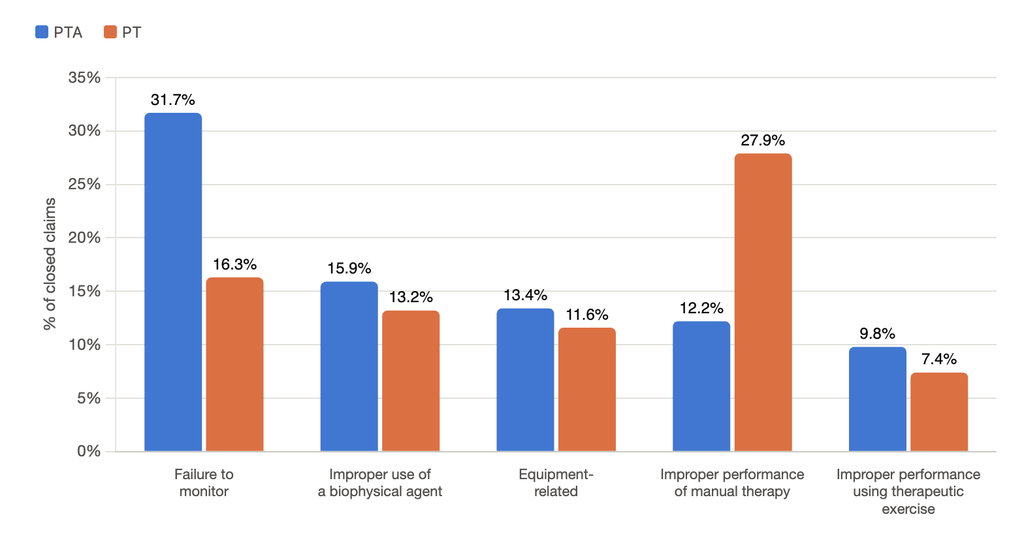
Failure to monitor represented 31.7% of PTA claims and 16.3% of PT claims, nearly twice the proportion. Claims related to improper performance of manual therapy were more than twice as high for PTs (27.9%) as for PTAs (12.1%), largely driven by dry needling claims, which is outside the scope of work for PTAs in most states.
Average total incurred for failure to monitor was $291,613 for PTAs versus $197,783 for PTs, a 47.4% difference. Interestingly, although PTA claims for improper performance of manual therapy were less than half as many as PT claims, the average total incurred was significantly higher for PTAs ($213,481) versus PTs ($161,317).
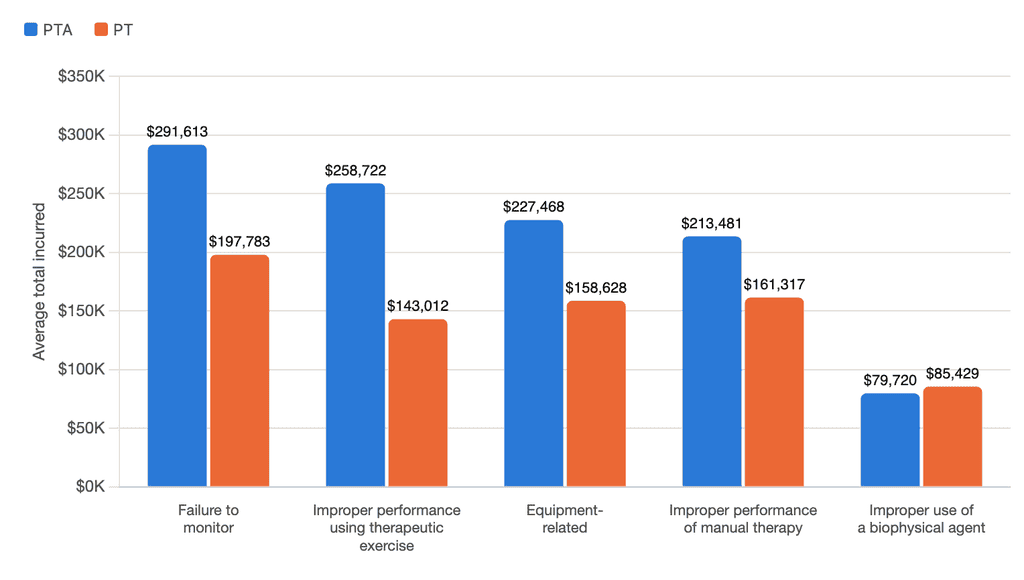
The average total incurred for PTA claims related to failure to monitor is 79.8 percent higher than the average incurred for all professional liability claims ($291,613 versus $162,174).
The report does not establish that the PTA monitoring claims involved dry needling. Only four states allow PTAs to perform dry needling, and there is not enough data on PTAs performing dry needling. The PTA claims involved mostly hot packs and electrical stimulation, among others, which is concerning because electrical stimulation is often used in combination with dry needling.
Monitoring and communication deserve particular scrutiny before expanding responsibilities. A supervising PT’s availability does not, by itself, establish that a developing complication will be recognized promptly by the PTA delivering treatment.
Dry needling already contributes to liability claims
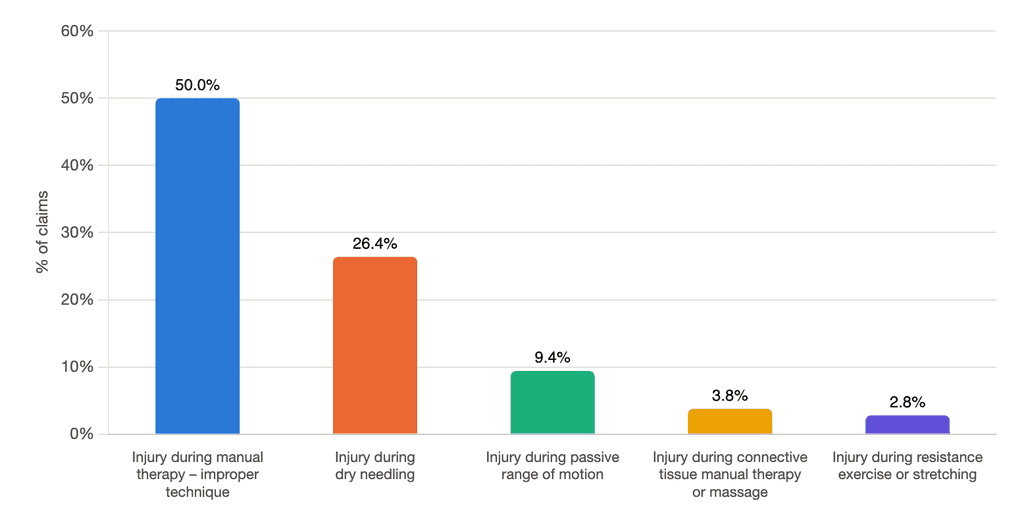
Manual therapy claims represented 27.9% of PT claims, with injury during dry needling accounting for 26.4% of claims within the manual therapy category.
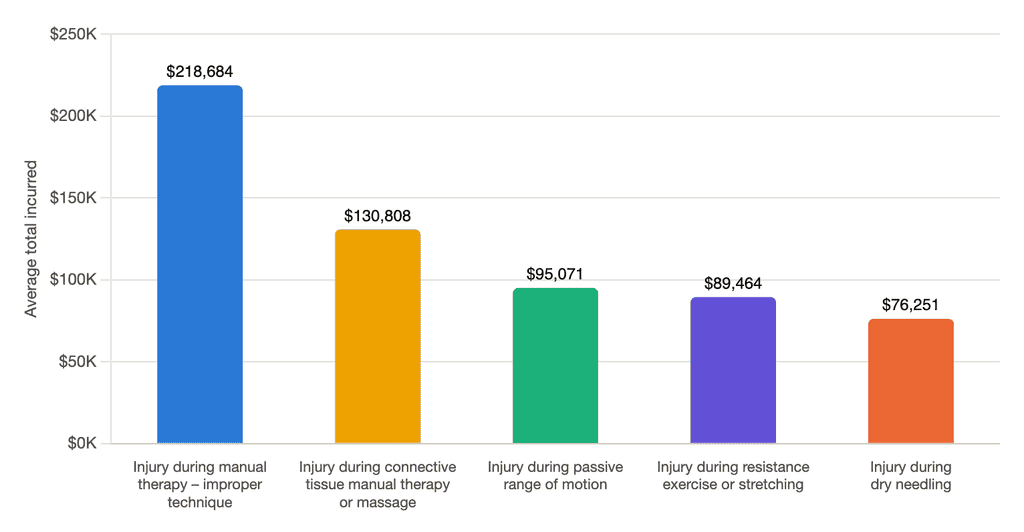
The average total incurred for dry needling claims was $76,251, lower than several other manual therapy subcategories.
PT licensure alone does not guarantee safe dry needling. PT State Boards and dry needling course providers should collaborate in strengthening preparation, assessment, and complication recognition for every practitioner. Expanding dry needling eligibility to PTAs requires evidence of adequate preparation, which currently does not exist.
Training and supervision must establish competence
Dry needling requires continuing judgments about anatomy, needle placement, depth, direction, and the patient’s response. PTA associate-degree education does not include advanced-level assessments, which is why only PTs are legally allowed to perform initial evaluations. A PTA does not have the competence needed for advanced-level assessments and decisions during dry needling treatments. This is not a judgment about the dedication or value of PTAs, but a factual assessment of competency.
The proposal retains an 80-hour full training requirement and instructor assessment of competence. However, provisional registration could begin after 10 hours of theoretical and 10 hours of hands-on instruction, with the remaining 60 hours completed within two years. There is no basis for assuming that 20 hours of training is a sufficient starting threshold. In fact, I have been retained as an expert witness in a legal case against a PT who caused a pneumothorax after having completed only 20 hours of education!
The concern also applies to provisional PT practice. Permission to perform an invasive procedure should rest on demonstrated readiness before patient exposure. A rule requiring practitioners to stay within their competence leaves a crucial question: how will the Board verify that they can recognize the limits of that competence?
Supervision should also be tested against clinical realities. Who makes decisions when unexpected symptoms arise? What observation and immediate assistance are required? How does a supervisor address a competing patient workload? How are escalation decisions documented and audited? These are practical questions for evaluating the proposed system, not claims that every clinic currently supervises inadequately. As the CNA/HPSO report clearly identified, improper delegation by PTs and inadequate supervision are already major concerns. Allowing dry needling by PTAs, given significant supervision failures, does not seem to align with the Board’s mission of protecting the public.
Absence of reported harm is insufficient reassurance
Experience in other jurisdictions does not provide adequate evidence of PTA dry needling safety. An absence of reported increases in adverse events is difficult to interpret without knowing how many PTAs perform the procedure, how many treatments they provide, which anatomical regions they treat, and how consistently complications are captured.
Board complaints, insurance claims, and clinical adverse-event reporting describe different subsets of experience. None alone measures every complication. Insurance liability data are more accurate than complaints filed with state PT Boards. Most professional liability cases may never be shared with PT Boards.
State board disciplinary statistics cannot be assumed to represent the full incidence of patient harm or professional liability claims. Occasionally, boards may receive information about malpractice payments, but many claims do not result in qualifying payments, and not every reported claim results in an investigation or disciplinary action.
Conversely, incomplete surveillance is not proof that injuries are common. The appropriate conclusion is uncertainty, and the policy question is whether that uncertainty has been adequately addressed before expanding practice, which it has not.
Potential improvements in access or scheduling deserve consideration. Evidence of patient benefit should support them, and they should be weighed against the adequacy of the proposed safeguards. The HPSO report does not demonstrate that allowing PTA dry needling improves access, outcomes, or safety.
A defensible decision for Maryland
Maryland should reject PTA dry needling authorization in the proposal and reconsider the provisional route that permits treatment before completion of full training.
Physical therapists should advocate for this standard while improving their own dry needling practice. Careful patient selection, informed consent, documented reassessment, and timely recognition and referral of complications remain essential responsibilities. The HPSO report explicitly reinforces these safeguards.
The claims data do not suggest that every PTA would perform dry needling unsafely. They do reveal consequential failures in delegation and monitoring, alongside established dry needling liability exposures. Coupled with unresolved preparation and supervision questions, they support a clear policy position: Maryland has not established a sufficient patient safety basis for this expansion. Protecting the public warrants maintaining the boundary.
Jan Dommerholt, PT, DPT | President / CEO, Myopain Seminars
References
1. CNA and Healthcare Providers Service Organization. Physical Therapy Professional Liability Claim Report. Fifth edition, 2026. Report information: https://www.hpso.com/ptclaimreport
2. Maryland Board of Physical Therapy Examiners. Proposed amendments to COMAR 10.38.12 Dry Needling, regulations .03 and .04. Maryland Register. Vol. 53, Issue 11, May 29, 2026. https://dsd.maryland.gov/MDRIssues/5311/Assembled.aspx (accessed November 9, 2026).