
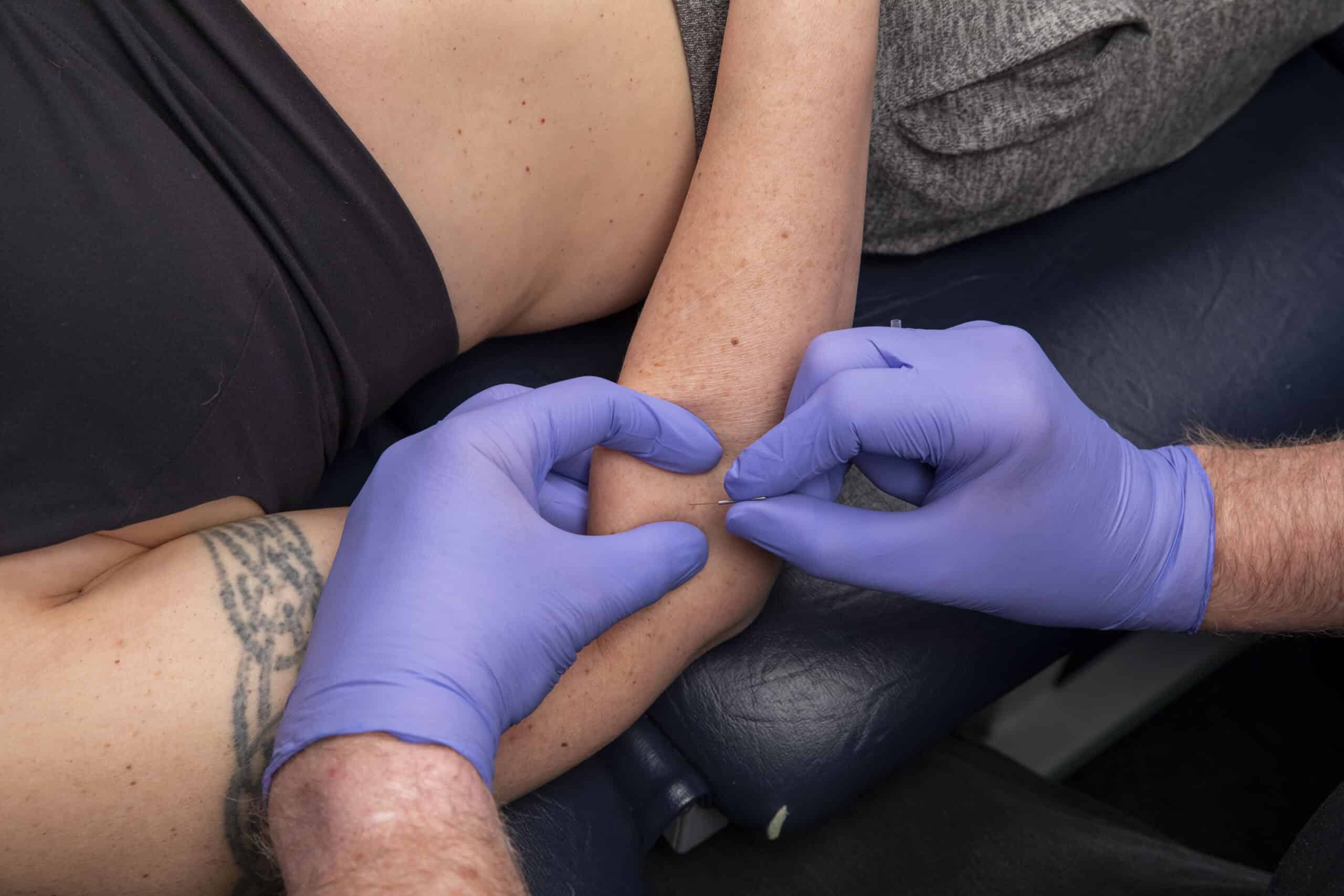
The Maryland Board of Physical Therapy Examiners has posted a “Notice of Proposed Regulatory Action – COMAR 10.38.12 (Dry Needling) on its website with an invitation to submit public comments.
This blog highlights the comments prepared by Jan Dommerholt, President/CEO of Myopain Seminars. We encourage anyone with an opinion to also submit comments to help shape the future of dry needling by physical therapists in Maryland. Feel free to review and use Jan’s comments for inspiration, and submit your comments to:
Jordan Fisher Blotter, Director, Office of Regulation and Policy Coordination, Maryland Department of Health, 201 West Preston Street, Room 534, Baltimore, Maryland 21201, or call 410-767-0938, or email to mdh.regs@maryland.gov.
Comments will be accepted through June 29, 2026. A public hearing has not been scheduled.
Introduction
After a thorough review of the proposal by the Maryland Secretary of Health to amend Regulations .01—.04 and adopt new Regulation .05 under COMAR 10.38.12 Dry Needling as published in Volume 53, Issue 11, of the Maryland Register, I appreciate the opportunity to submit my comments in support of some aspects of the amendment, along with serious concerns and objections to other parts.
As an introduction, I am generally regarded as the physical therapist who introduced dry needling to the United States and many other countries by offering the first accredited dry needling courses. I am one of the world’s most prominent dry needling researchers, authors, and lecturers. I have published several. books on the topic of dry needling, nearly 100 book chapters, 86 refereed scientific studies and articles, and 75 invited commentaries, editorials, and other publications.
I have provided expert testimony on dry needling in nearly 20 US states on behalf of the national American Physical Therapy Association (APTA) and its State Chapters, and I have delivered over 150 keynote lectures and other presentations at scientific conferences worldwide.
Since 1995, I have been the owner and president/CEO of Bethesda-based Myopain Seminars, the first continuing company in the US offering dry needling courses, initially operating as the Janet G. Travell, MD Seminar Series. In the US alone, Myopain Seminars offers approximately 140 courses annually.
In addition, I am the co-founder of the International Dry Needling Education & Training Advisory Group, established in 2023 to advance the practice of dry needling therapy by upholding the highest educational and safety standards worldwide.
As stated, the purpose of the proposed amendments is to:
(1) Update certain definitions;
(2) Clarify minimum education and training requirements to practice dry needling;
(3) Add the authority for physical therapist assistants to practice dry needling under supervision;
(4) Establish a provisional registration for physical therapists and physical therapist assistants to practice dry needling; and
(5) Add a new regulation for continuing education requirements.
In this submission, I would like to address the stated purpose and amendments in some detail.
Definitions
Much to my surprise, the proposed amendments have removed “Requires ongoing evaluation, assessment, and re-evaluation of the impairments.”
As a globally recognized authority in dry needling, I strongly believe and maintain that the invasive procedure of dry needling always requires ongoing evaluation, assessment, and re-evaluation of impairments to be performed safely and effectively. Dry needling, in the context of physical therapy practice, is so much more than “sticking needles in a patient’s body,” and should always be part of a comprehensive clinical reasoning plan developed and implemented by a physical therapist. As part of a clinical reasoning strategy, dry needling always requires ongoing evaluation, assessment, and re-evaluation of impairments. Suggesting otherwise jeopardizes the responsibility of the Maryland Board of Physical Therapy Examiners to protect the public against serious adverse events related to dry needling.
Without a sound clinical rationale, how would a clinician be able to determine where to place needles, and perhaps even more importantly, where not to insert needles? There are many possible dry needling scenarios in which a patient would likely experience serious harm if a clinician does not properly and safely assess needle placement, such as when needling muscles between the scapulae (shoulder blades). May I suggest you read the paper I co-authored in 2025 [1]?
Dropping the requirement for ongoing evaluation, assessment, and re-evaluation will likely lead to a sharp increase in serious adverse events associated with dry needling. The main objective of the Maryland Board of Physical Examiners is to protect the public. Maryland’s citizens deserve to be treated by physical therapists who have the knowledge, education, and training to use dry needling in the safest possible manner, which requires ongoing evaluation, assessment, and re-evaluation of the impairments. It is irresponsible to strike the requirement for ongoing evaluation, assessment, and re-evaluation when administering dry needling.
While it is not known how many serious adverse dry needling events occur annually in Maryland, such as pneumothoraces or epidural hematomas, leading to quadriparesis or hemiparesis, nationwide, the number of dry needling-related claims has increased significantly during the past ten years.
It is conceivable that the State of Maryland, the Secretary of Health, and the Maryland Board of Physical Therapy Examiners will be included in dry needling lawsuits and be held responsible for removing the requirement for ongoing evaluation, assessment, and re-evaluation from the regulations.
(b) Of equal concern is that under “Definitions,” the proposed amendments include items 9 and 10:
(9) “Provisional registration” means a temporary registration to perform dry needling issued to a physical therapist or a physical therapist assistant completing the education and training necessary for a registration to perform dry needling in the State.
(10) “Registrant” means a physical therapist or a physical therapist assistant registered with the Board to perform dry needling in the State.
According to these clauses and others, the amendments propose that physical therapy assistants would be allowed to use dry needling in Maryland, which clarifies why the requirement for ongoing evaluation, assessment, and re-evaluation was eliminated, opening the door to expand the scope of practice of physical therapy assistants.
Minimum education and training requirements to practice dry needling
I am pleased to see that the proposed amendments removed the requirement that 40 hours of theoretical instruction needs to be “live” or “in-person.” However, I do not understand the remaining requirement that 10 hours of theoretical education continues to be “in-person instruction,” which seems antiquated in 2026, where complete graduate degrees can be obtained through online education. Any requirement for “in-person instruction” for the theoretical aspects of dry needling seems outdated and unnecessary. I recommend removing any requirement for in-person instruction for all theoretical teachings.
The proposed amendments state that dry needling instruction must be “instructed by a licensed health care practitioner competent in dry needling procedures”; however, it is unclear whether that licensed practitioner must be licensed in Maryland or may be licensed in other jurisdictions, such as other states or countries. I strongly recommend that the regulations not require that such a health care practitioner be licensed in Maryland.
Myopain Seminars’ dry needling faculty includes health care practitioners licensed in other states and countries, including Spain, who are recruited for their exceptional knowledge, skills, publications, and teaching abilities. For example, Myopain Seminars offers a unique course in Dry Needling for Neurological Conditions, which includes dry needling treatment for spasticity in neurological conditions such as stroke, cerebral palsy, and multiple sclerosis. The instructor is a licensed physical therapist from Spain. Restricting such highly qualified instructors from teaching specialized dry needling courses in Maryland will seriously impact citizens not only in Maryland but also in other states. The proposed amendments include a statement that “the proposed action has no impact on individuals with disabilities,” which will not be true if foreign instructors cannot teach dry needling courses in Maryland.
If this were implemented as stated, the State of Maryland would also experience an economic impact, as Myopain Seminars and other dry needling course providers would have no choice but to stop offering certain courses in Maryland. The states bordering Maryland do not have such restrictions, and therefore, I would take courses across the state line into Virginia or Delaware, among other options, depriving the State of Maryland of income produced by clinicians from the entire country and other countries attending courses in Bethesda, staying in Bethesda hotels, visiting restaurants in Bethesda, etc. The economic impact estimate states that the proposed action has no economic impact, which will be inaccurate when certain courses are no longer offered in Maryland.
Regarding continuing education courses being sponsored by the American Physical Therapy Association and the Federation of State Boards of Physical Therapy, to the best of my knowledge, neither organization “sponsors” dry needling continuing education courses, which makes me wonder why they are listed here.
I appreciate striking the requirement that all theoretical education must be provided “In person at a face-to-face session; or in real time through electronic means that allow for simultaneous interaction between the instructor and the participants.”
However, I am very concerned that the proposed amendments also removed the requirement that “A physical therapist may not fulfill any portion of the practical, hands-on instruction required under §A(2) of this regulation with online or distance learning,” which implies that under the new regulations, a physical therapist would be allowed to receive the practical, hands-on instruction online. Neither section 2 (At least 40 hours of hands-on instruction in the application and technique of dry needling, instructed by a licensed health care practitioner competent in dry needling procedures) nor this amendment preclude a physical therapist from learning dry needling online if the training was instructed by a licensed health care practitioner.
Currently, there are approximately 60 dry needling continuing education course companies in the United States, which creates a challenge for any state board in determining which course programs to approve. Already, many of these programs have very loose standards, such as no established instructor-student ratio, no significant didactic components, and no clinical reasoning process, among others. I predict that by removing the requirement that all practical, hands-on education be conducted in person, several opportunistic dry needling course companies will immediately take advantage of this created “loophole” and, by doing so, jeopardize the safety of the public and the integrity of physical therapy dry needling education.
After teaching dry needling courses for the past 30 years, I strongly urge you to require that all practical, hands-on education be conducted in person. Dry needling is an invasive procedure, and giving physical therapists the option to learn dry needling online or with distance learning without ongoing direct in-person supervision is a guaranteed recipe for potentially harming the public.
In addition, I recommend that the amended regulations require a minimum instructor-student ratio. While there is no data supporting a set ratio, based on my extensive experience teaching dry needling courses, I would suggest a minimum ratio of 1:15. At this point, some dry needling course companies approved in Maryland, offer dry needling courses with a ratio of 1:40 or even 1:60, which, of course, is irresponsible and greedy, but even more concerning, physical therapists trained through these institutions will not have the minimum dry needling skills required to offer dry needling safely to the public of Maryland.
I am pleased that the amendments eliminated the requirement that physical therapists have practiced for at least 2 years before dry needling would be allowed. That provision never made any sense to me.
The proposed amendments include a clause allowing physical therapists and physical therapy assistants to begin using dry needling in clinical practice after completing only 10 hours of theoretical education and 10 hours of practical hands-on instruction, with the limitation that the dry needling competencies obtained during those 10 hours are limited to those. The clinician would have to pass a competency assessment completed by the instructor. Even more surprisingly, clinicians are given 2 years to complete the remaining 60 hours of required education. In comparison, other states, such as Illinois, require that all dry needling education be completed within one year.
I maintain that, upon completion of 10 hours of hands-on instruction, clinicians lack the competency to safely insert needles or palpate with a needle, which are critical skills to ensure public safety.
Instead, if the Board insists on defining a minimum number of hours, why not require successful completion of at least one complete course lasting at least three days and the ability to demonstrate competence?
In comparison, the regulations of the Commonwealth of Virginia define the required elements of dry needling education and stipulate that “the practitioner shall not perform dry needling beyond the scope of the highest level of the practitioner’s training,” which eliminates the arbitrary choice of a particular number of hours, and is therefore more in line with all other treatment approaches used in physical therapy [2].
Physical Therapist Assistants
In 2015, the Federation of State Boards of Physical Therapy (FSBPT) issued the independently commissioned HUMRRO study, “Analysis of Competencies for Dry Needling by Physical Therapists,” which concluded that doctoral-level physical therapy education in the United States already covered 86% of the required competencies for dry needling in clinical practice [3]. In other words, dry needling continuing education companies would be responsible for offering the remaining 14% of minimum competencies. In 2024, an updated HUMRRO study was published, showing that 88% of the minimum dry needling competencies were covered in doctoral-level physical therapy education [4]. A similar study of master ‘s-level athletic training education showed similar results, although it was not an independently commissioned study, which likely introduced implicit bias [5]. There is no scientific analysis of the competencies of physical therapy assistants in dry needling.
The proposed amendments suggest that physical therapy assistants would be qualified to use dry needling in clinical practice without any supporting evidence or data. A few comments:
- It is correct that a few other states have made similar decisions. It is too early to determine whether the incidence of serious adverse events will increase.
- It is correct that there is a shortage of physical therapists nationwide, which Is expected to increase.
- It is also correct that my company would financially profit from expanding the pool of potential course participants.
In my professional opinion, physical therapy assistants lack the minimum level of education required to perform dry needling safely, accurately, and efficiently. An associate degree does not sufficiently prepare physical therapy assistants in anatomy, physiology, neurophysiology, and clinical reasoning for dry needling. Furthermore, despite what the proposed amendments suggest, dry needling does require ongoing assessments and evaluations, which are not part of the skill set of physical therapy assistants.
Expanding the scope of physical therapy assistants to meet the increasing demands of physical therapy against a growing labor shortage is not the responsibility of the Office of Regulation and Policy Coordination and the Maryland Department of Health. The Department and the Maryland Board of Physical Therapy Examiners need to keep their focus on protecting the public. Expanding the scope of practice for physical therapist assistants without the necessary depth of training and clinical preparation risks compromising professional standards. There is a clear and significant gap in education, training, and clinical reasoning between doctoral-level physical therapists and associate-level physical therapist assistants that must be considered.
Ethical considerations, passion, and concern for the field of physical therapy, the safety and well-being of our patients always come first over commercial interests. I understand that some dry needling course providers in other states are already allowing physical therapist assistants to attend their courses. There is no data on whether these individuals can use dry needling safely and accurately, or whether they even feel confident enough to use dry needling with their patients.
Giving physical therapist assistants permission to believe that dry needling falls within their level of competence and suggesting that they can use it safely and accurately is based on nothing but unsupported assumptions, which should never be the basis for setting policy. Dry needling requires continuous, high-level clinical assessment, decision-making, and adjustment in real time. These competencies are developed extensively during the doctoral-level education of physical therapists, but they are not matched in the associate-level training of physical therapist assistants. This distinction is fundamental and should remain non-negotiable.
Dry needling is an invasive procedure, and consistent with the American Physical Therapy Association’s Guide to Physical Therapists’ Practice, dry needling interventions should be performed exclusively by physical therapists [6]. Such interventions also include spinal and peripheral joint mobilization/manipulation, amongst others. According to the APTA,
“Physical therapists’ practice responsibility includes all elements of patient and client management: examination, evaluation, diagnosis, prognosis, intervention, and outcomes. The entirety of evaluation, diagnosis, and prognosis, as well as components of examination, intervention, and outcomes, must be performed by the physical therapist exclusively due to the requirement for immediate and continuous examination, evaluation, or synthesis of information. Physical therapist assistants may be appropriately utilized in components of intervention and in collection of selected examination and outcomes data.”
Of course, the Office of Regulation and Policy Coordination, the Maryland Department of Health, and the Maryland Board of Physical Therapy Examiners can choose to ignore the APTA’s position and allow physical therapy assistants to begin using dry needling with their patients. However, if the proposed amendments are accepted in their current form, I am afraid that the Maryland Department of Health, the Office of Regulation and Policy Coordination, and the Maryland Board of Physical Therapy Examiners will change the overall scope of limited physical therapy in the State of Maryland with far-reaching consequences, as well as trigger renewed opposition to dry needling by physical therapists from acupuncture opposition.
One argument used by various acupuncturists, acupuncture societies, and acupuncture boards against physical therapists performing dry needling is that physical therapists lack the minimum required level of education to do so. While the State of Maryland Attorney General determined that argument to be flawed [7], I predict that very soon legislation will be introduced by the acupuncture lobby in Maryland to once again shut down any dry needling by physical therapists. In 2024, acupuncturists proposed new legislation in Georgia that would significantly restrict the scope of physical therapy regarding dry needling [8], followed in 2025 by Massachusetts [9]. I further predict that the supporting arguments will include
- The expansion of dry needling to physical therapist assistants
- Allowing physical therapists and physical therapist assistants using dry needling in clinical practice after having completed only 10 hours of theoretical education and 10 hours of practical hands-on instruction
For these reasons, I oppose dry needling by physical therapist assistants.
Respectfully Submitted,
[1] Mintken PE, Denman B, Dommerholt J. Pneumothorax after dry needling of intrascapular muscles using a rib bracketing technique: Insights from the clinician, patient, and clinical expert. Phys Ther. 2025;105(8).
[2] https://townhall.virginia.gov/L/ViewXML.cfm?textid=13315
[3] Caramagno J, Adrian L, Mueller L, Purl J. Analysis of competencies for dry needling by physical therapists. Alexandria: Federation of State Boards of Physical Therapy; 2015.
[4] Harris JL, Caramagno J, Bryant E, Adrian L, Woolf R. Dry Needling Competency Update: Report Memo 2024. Alexandria, VA: Federation of State Boards of Physical Therapy; 2024. Report No.: 152.
[5] Hortz BV, Falsone S, Tulimieri D. Current Athletic Training Educational Preparation for Dry Needling. J Sports Med Allied Health Sci. 2019;4(3):5
[6] American Physical Therapy Association. APTA Guide to Physical Therapist Practice 4.0. Alexandria, VA, USA: American Physical Therapy Association; 2023.
[7] https://oag.maryland.gov/resources-info/Documents/pdfs/Opinions/2010/95oag138.pdf
[8] https://myopainseminars.com/resources/blog/georgia-bill-could-limit-patient-access-to-dry-needling/
[9] https://myopainseminars.com/resources/blog/legislative-news-july-2025/