
Moving Beyond Compliance: Transforming Rehabilitation Through Motivation, Motor Learning, and Creative Aging
One of the greatest challenges in physical therapy is not designing effective exercise programs—it is ensuring that patients actually perform and enjoy them.
Despite overwhelming evidence supporting therapeutic exercise for musculoskeletal, neurological, cardiopulmonary, and chronic pain conditions, adherence to home exercise programs remains remarkably poor. Research suggests that approximately 70% of patients fail to complete their prescribed physical therapy exercises. As a result, otherwise effective rehabilitation programs often fail to achieve their intended outcomes, increasing healthcare costs and prolonging disability.
For decades, rehabilitation professionals have focused on improving exercise prescription through better biomechanics, including posture training, individualized treatment plans, patient education, and increasingly sophisticated interventions. Yet even the most carefully designed program can fail when patients become bored, lose motivation, or struggle to recognize meaningful progress.
Perhaps the problem is not the exercises themselves. Perhaps the problem is the way they are presented.
What the Gaming Industry Understands About Human Behavior
Few industries have mastered long-term engagement as successfully as the gaming industry. Millions of people voluntarily devote countless hours to overcoming difficult challenges, repeating tasks after failure, and pursuing goals that may require months or even years to achieve. Players willingly engage in activities that, from an outsider’s perspective, appear repetitive and demanding. Game designers achieve this not through coercion, but through an understanding of human motivation.
Games provide:
- Immediate feedback
- Clear goals
- Progressive challenges
- Visible progress
- Opportunities for mastery
- Safe failure
- Meaningful rewards
- Autonomy and choice
These elements create powerful learning environments that sustain engagement long after the initial novelty wears off. Interestingly, these same principles describe what successful rehabilitation and physical therapy require.
A patient recovering from a stroke, rotator cuff repair, total knee replacement, chronic low back pain, or a patient having been diagnosed with a lifelong diagnosis, such as Ehlers-Danlos Syndrome or Parkinson’s disease, faces many of the same challenges as a gamer progressing through increasingly difficult levels. Both require repeated practice, incremental improvement, persistence through setbacks, and sustained motivation over time.
Yet traditional exercise programs offered in clinics or as home programs rarely incorporate the motivational architecture that makes games so effective.
The Neuroscience of Motivation
The effectiveness of games is rooted in neuroscience, particularly in the role of dopamine.
Contrary to popular belief, dopamine is not simply the brain’s “pleasure chemical,” or the chemical that is insufficient in patients with Parkinson’s. Dopamine plays a central role in anticipation, prediction, learning, and motivation. The brain becomes highly engaged when outcomes are uncertain and when actions produce meaningful feedback. Games create continuous cycles of challenge, action, feedback, and reward. Every attempt provides information. Every success reinforces motivation. Every failure becomes an opportunity to learn.
Traditional rehabilitation often operates very differently. Patients may perform the same exercises day after day with little indication that they are improving. Gains in strength, endurance, motor control, and function occur gradually and may be difficult to perceive. Without visible markers of progress, many patients incorrectly conclude that their efforts are not working.
Motivational psychology further demonstrates that long-term engagement depends on three fundamental psychological needs, namely competence, autonomy, and relatedness. Games naturally satisfy these needs. Traditional exercise programs frequently do not. The question is therefore not whether gamification belongs in rehabilitation. The question is how effectively we can integrate proven principles of motivation and learning into physical therapy.
External-Focus Exercise: The Missing Link
An important clue comes from research on external-focus exercise and motor learning. Traditional rehabilitation often relies on an internal focus of attention. Patients are instructed to contract specific muscles, stabilize certain body regions, activate their core, maintain posture, or monitor their movement patterns. While well-intentioned, internal-focus instructions may inadvertently interfere with motor learning and movement efficiency.
Research in motor learning has repeatedly demonstrated that an external focus of attention produces superior outcomes. Rather than concentrating on body parts or muscles, patients focus on the effect of their movements on the environment.
Instead of saying, “extend your knee,” a therapist might say, “kick the ball toward the target.”
Instead of “tighten your core,” the instruction becomes, “place your shoes on the Bosu ball and hit the lights on the wall.”
These seemingly small changes create significant differences in motor performance, movement efficiency, and learning. External-focus approaches facilitate automatic movement control, reduce conscious overthinking, and enhance skill acquisition. Gamification naturally encourages this type of learning. When a patient interacts with targets, lights, virtual environments, balance challenges, or movement-based games, attention shifts away from the body and toward meaningful goals in the environment. Exercise becomes less about performing repetitions and more about accomplishing tasks.
The distinction is profound. Patients are no longer exercising to exercise. They are solving problems.
The OPTIMAL Theory and Why Games Work
The scientific foundation for gamified rehabilitation becomes even stronger when viewed through the lens of the OPTIMAL Theory of Motor Learning developed by Gabriele Wulf and Rebecca Lewthwaite. This framework identifies three critical elements that optimize motor learning:
- External focus of attention
- Enhanced expectancies
- Autonomy support
All three are naturally embedded within successful games. Players receive continuous evidence of success through points, levels, badges, achievements, and progress indicators. These enhance expectancies and build confidence. Players are given choices regarding strategies, goals, and challenges. This promotes autonomy. Players focus on objectives within the environment rather than on the mechanics of movement itself. This creates an external focus of attention. Together, these factors increase intrinsic motivation, improve motor performance, and accelerate learning.
Remarkably, these same principles address one of the most persistent problems in rehabilitation: adherence. Give your patients a critical choice in what’s on the program for today by addressing their goals, desires, dreams, and objectives, thereby providing them with autonomy. Challenge your patients in targeting external objects rather than focusing on their bodies and perceived disability. Explain that you have seen this before and in your experience, your patients are successful, which triggers enhanced expectancies.
Chronic Pain and the Need for a New Model
Gamification may be particularly valuable for individuals living with persistent pain.
Traditional exercise programs often unintentionally reinforce a patient’s focus on symptoms, impairments, and perceived limitations. Patients become hypervigilant about pain, movement quality, and physical deficits. Research on chronic pain suggests that this internal focus may actually hinder recovery. External-focus approaches redirect attention toward meaningful tasks and environmental goals while simultaneously enhancing confidence and self-efficacy. Patients begin to discover that they can move more than they thought possible. They become participants in movement rather than observers of pain. This shift from symptom monitoring to task engagement may be one of the most powerful mechanisms underlying successful rehabilitation.
From Rehabilitation Compliance to Creative Aging
The importance of gamification becomes even more compelling when we consider the work of the late Gene Cohen, MD, PhD, one of the most influential thinkers in gerontology and the former director of the National Institute on Aging. Cohen challenged the outdated belief that aging is defined mainly by decline. Instead, he argued that later life contains significant potential for growth, creativity, adaptation, and contribution.
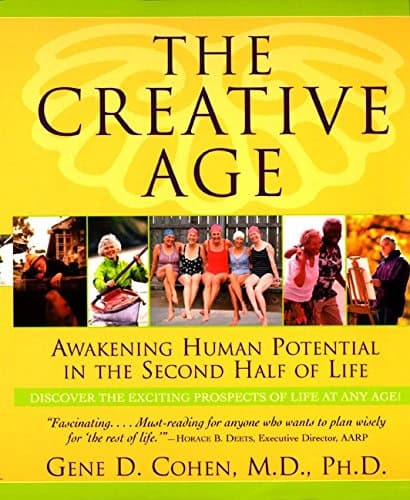
This perspective has profound implications for physical therapy. In 2009, shortly before his premature death, Gene and I discussed the similarities between his groundbreaking work in creative aging and my approach to physical therapy.
Too often, rehabilitation for older adults is framed around preventing losses in strength, balance, mobility, independence, and confidence. While these concerns are real, they tell only part of the story. Cohen argued that aging should also be viewed as a developmental stage characterized by new opportunities for learning and personal growth.
Gamified rehabilitation aligns perfectly with this vision. Rather than viewing exercise as a medical obligation, patients experience rehabilitation as a process of exploration, mastery, and achievement. They are not merely performing exercises; they are progressing through challenges, unlocking capabilities, and solving movement problems.
They are discovering what remains possible. Initial success is achieved when patients are amazed that they can work this hard while exercising, whether they engage in virtual reality gaming or knocking out lights.
Everyday Creativity Through Movement
Cohen defined creativity as bringing something valuable into existence. In rehabilitation, creativity does not require painting a masterpiece or composing music. Creativity may involve walking safely to the mailbox, climbing stairs without fear, returning to gardening, playing golf again, dancing at a family wedding, traveling independently, lifting a grandchild, or participating in community activities. In other words, engage in acts of everyday creativity. They represent meaningful accomplishments that restore identity, purpose, and quality of life.
Gamified rehabilitation provides a framework for pursuing these goals while maintaining engagement throughout the process.
The Future of Physical Therapy
The future of rehabilitation may depend less on discovering new exercises and more on improving how exercises are experienced. Gamification is not about turning physical therapy into entertainment. It is about designing rehabilitation environments that align with how the human brain learns, how motivation works, and how people continue to grow throughout life.
The most successful rehabilitation programs of the future will likely combine:
- Evidence-based therapeutic exercise
- External-focus motor learning principles
- Autonomy-supportive coaching
- Visible progress tracking
- Goal-oriented challenges
- Immediate feedback
- Meaningful rewards, and
- Personalized life goals
In other words, they will increasingly resemble the motivational architecture of successful games.
Conclusion
Physical therapy has traditionally emphasized compliance, while gamification encourages engagement. Compliance asks patients to follow instructions. Engagement invites patients to participate in a meaningful journey.
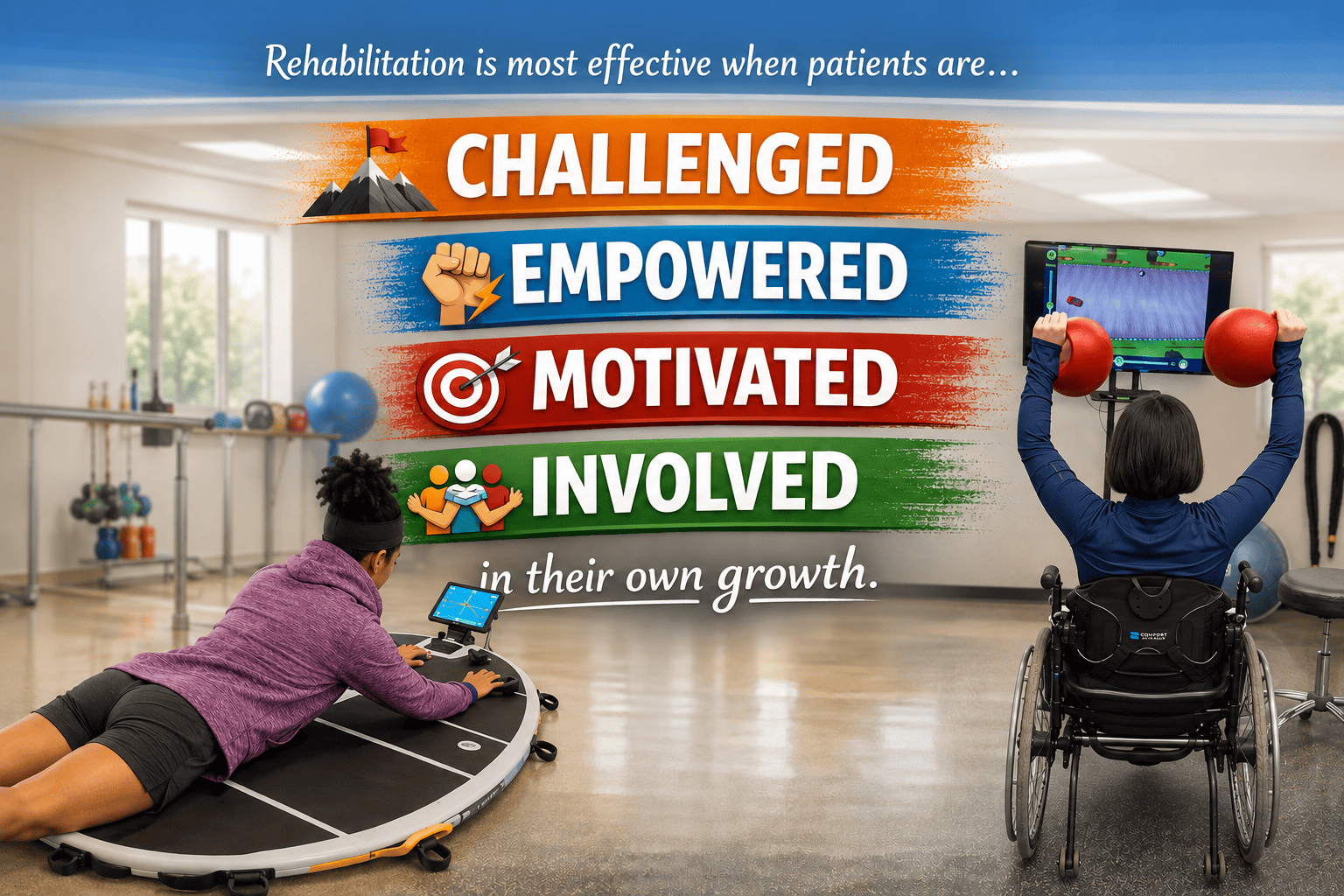
The evidence from neuroscience, motor learning, motivational psychology, chronic pain science, and Gene Cohen’s work on creative aging all point toward the same conclusion: rehabilitation is most effective when patients are challenged, empowered, motivated, and actively involved in their own growth. The goal of gamified rehabilitation is not simply to improve adherence. The goal is to transform rehabilitation from something patients have to do into something they want to do. When that happens, better outcomes are not just possible—they become far more likely.