
Some things are not as they appear, in life and in medicine.
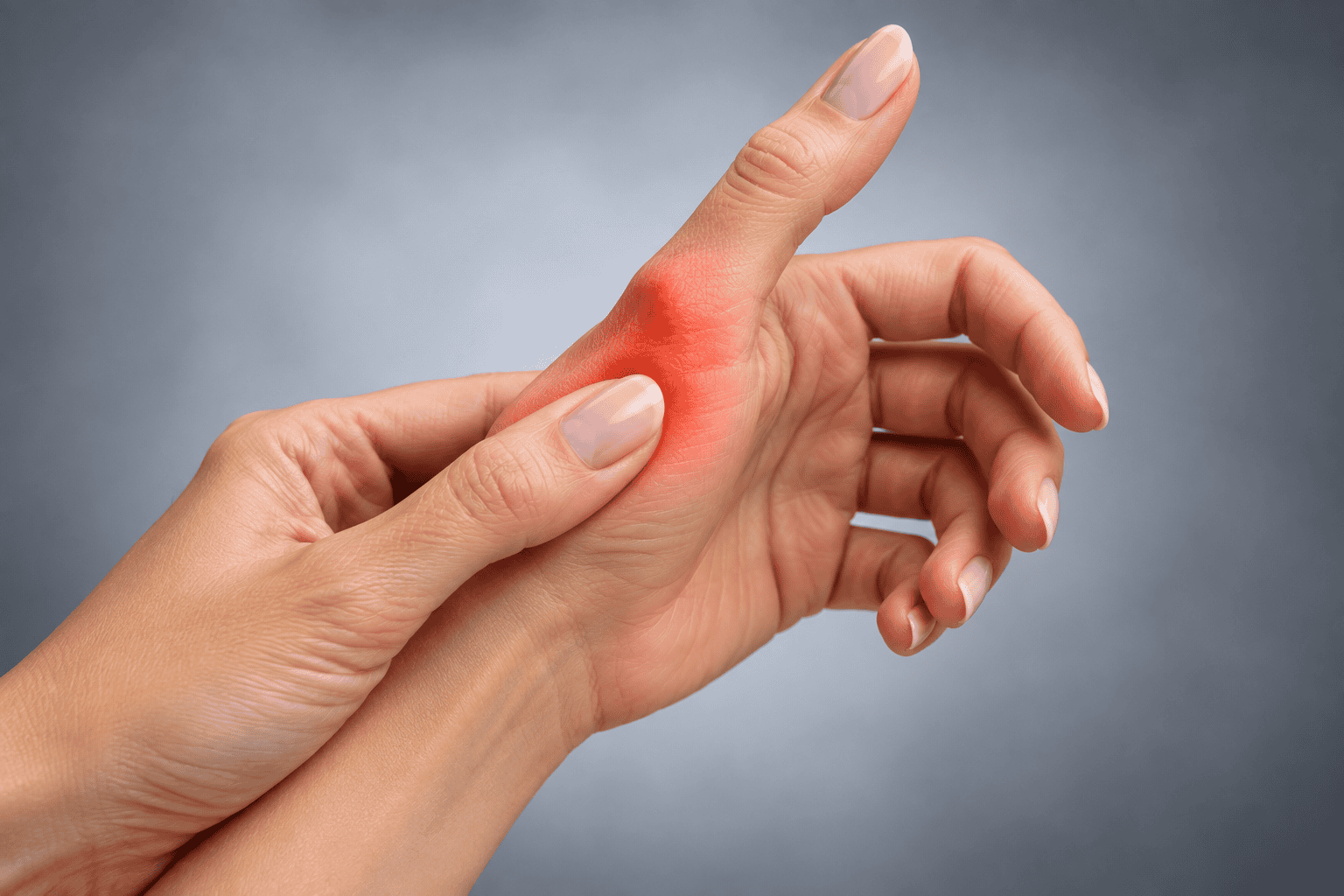
A patient reported to the clinic nine months s/p thumb joint replacement surgery. She had been cleared for full activity, but as she started using that hand more, the thumb pain returned. It was not the same pain she had before surgery, but it was limiting her return to function. This led to a further workup, which identified a partially torn scapholunate ligament.
The patient’s surgeon suggested a surgical repair to alleviate the thumb pain. The patient did not feel eager to jump at another surgery, especially one that did not necessarily have a direct effect on the thumb, so she reported to our clinic for an assessment based on good prior experiences for other issues.
On examination, the patient had restricted thumb ROM into opposition and could not touch the thumb to the base of the 5th metacarpal. There was also focal tenderness in the muscles around the thumb. She showed significant range-of-motion loss into pronation, raising a flag for supinator tightness. After further questioning, she was braced for 8 weeks with her wrist in neutral.
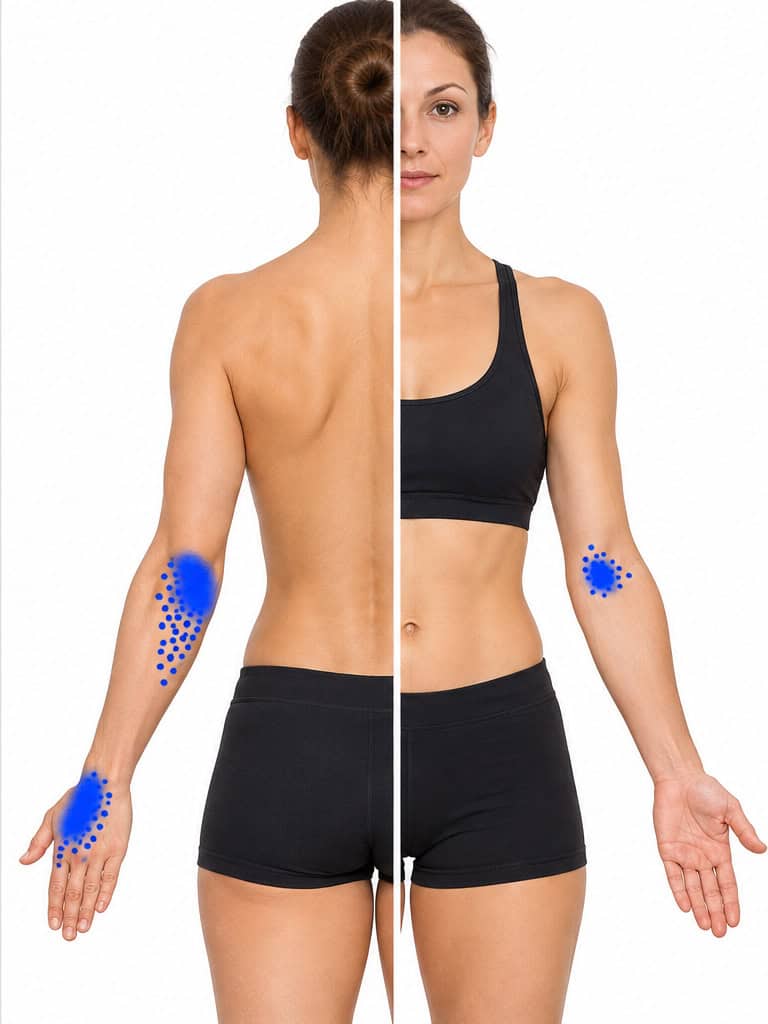
Based on her presentation and clinical findings, we suspected the supinator could be involved in her ongoing thumb pain because of its established referred sensation pattern.
Another factor was painful elbow flexion on testing in neutral but not in supination. This led me to believe that the patient could have some brachialis involvement. The brachialis muscle also has a strong referred sensation pattern to the thumb.
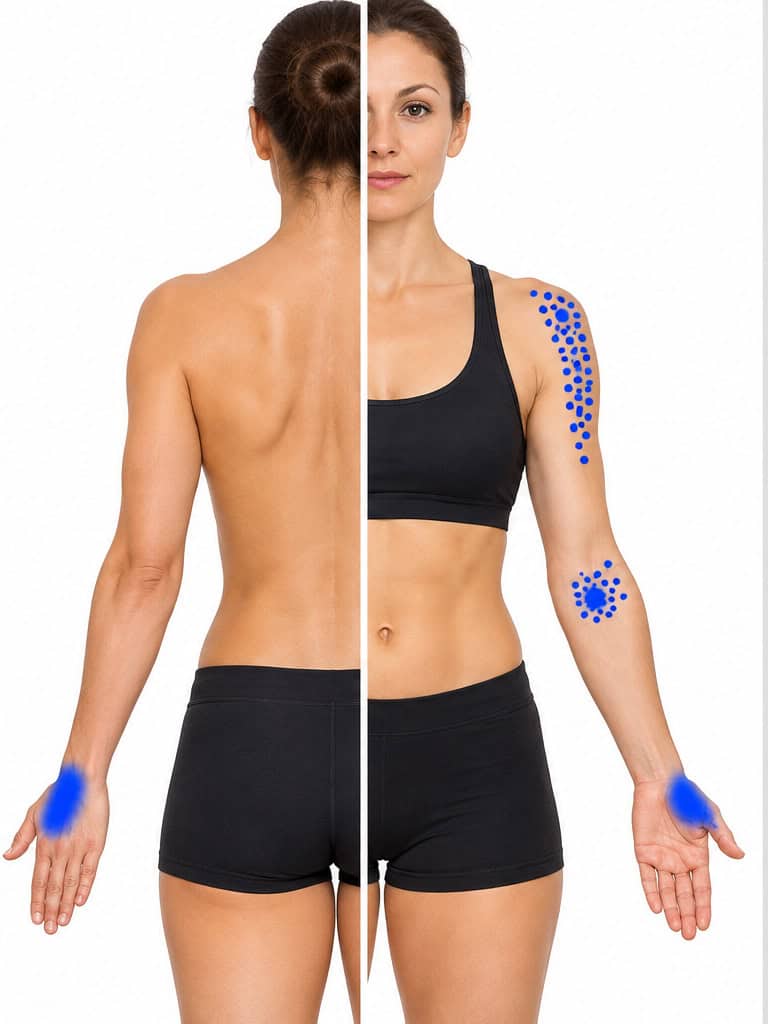
Based on the exam, we decided to treat the supinator and brachialis with dry needling, as the patient had prior good success with that modality. Another factor is that, with the implant in the thumb, direct treatment in the thumb area was not an option until we communicated with the surgeon’s office. Some surgeons in our area want to wait up to 12 months post-replacement surgery before any direct dry needling. This approach allowed us to address objective limitations while waiting for communication from the surgeon’s office.
Dry needling of both the supinator and brachialis muscles reproduced pain in the patient’s thumb. Immediately after dry needling, she was able to have full opposition of her thumb to the 5th CMC without pain for the first time since before her surgery. We ended up doing a total of three treatments over six weeks, with full resolution of thumb pain and a return to full hand use without issues.
This case reminded me of the core principle of dry needling: referred pain or sensations are often the culprit in some of our most confusing cases. Rubin et al. did some nice studies showing how quickly local peripheral pain can become centrally sensitized referred pain. Understanding these referral patterns is foundational to being a great myofascial practitioner and dry needler.
Curt Riley, PT, DPT, OCS, CMTPT – Instructor, Myopain Seminars
Rubin TK, Henderson LA, Macefield VG. Changes in the spatiotemporal expression of local and referred pain following repeated intramuscular injections of hypertonic saline: a longitudinal study. Journal of Pain, 2010, 11(8):737–45.