

Jan Dommerholt’s Influence on Research, Education, and Clinical Practice
Over the past several decades, dry needling has transitioned from a relatively obscure clinical technique, practiced by a small group of clinicians, to a global therapeutic approach used by physical therapists, physicians, chiropractors, acupuncturists, occupational therapists, dentists, and other healthcare professionals to manage myofascial pain and related disorders. This transformation reflects a growing recognition of the role of myofascial trigger points in pain and dysfunction, as well as the increasing demand for non-pharmacological treatments within modern rehabilitation and pain management.
At the center of this evolution stands a group of pioneers who helped translate emerging research into clinical practice. Among them, Dr. Jan Dommerholt, President and CEO of Myopain Seminars, has played a particularly significant role. Through research, education, and international collaboration, he has helped shape the modern, scientific understanding of myofascial pain and the global dissemination of dry needling. Dommerholt has helped transform dry needling from a specialized intervention into a globally recognized clinical practice.

The story of dry needling’s global rise is therefore not only about scientific discovery but also about leadership, collaboration, and the translation of evidence into clinical care. Several bibliometric analyses of dry needling research provide compelling evidence of Jan Dommerholt’s global impact.1, 2, 3 These studies not only demonstrate the rapid expansion of dry needling research worldwide but also highlight Dommerholt’s central role in the field’s development.
The Growing Scientific Landscape of Dry Needling
Research interest in dry needling has grown steadily since the late twentieth century. A bibliometric analysis of dry needling research identified 458 publications from 2000 to 2022, indicating a clear upward trend in research activity.1
Another large bibliometric study examining publications from 1979 to 2024 identified 618 scientific documents and more than 14,700 citations related to dry needling and myofascial trigger points.2 The analysis revealed that early research output was limited, with only a handful of publications appearing between 1979 and the early 1990s. However, after 2010, the number of studies increased substantially, reflecting the growing clinical adoption of dry needling within rehabilitation sciences, physical therapy, sports medicine, and pain management.
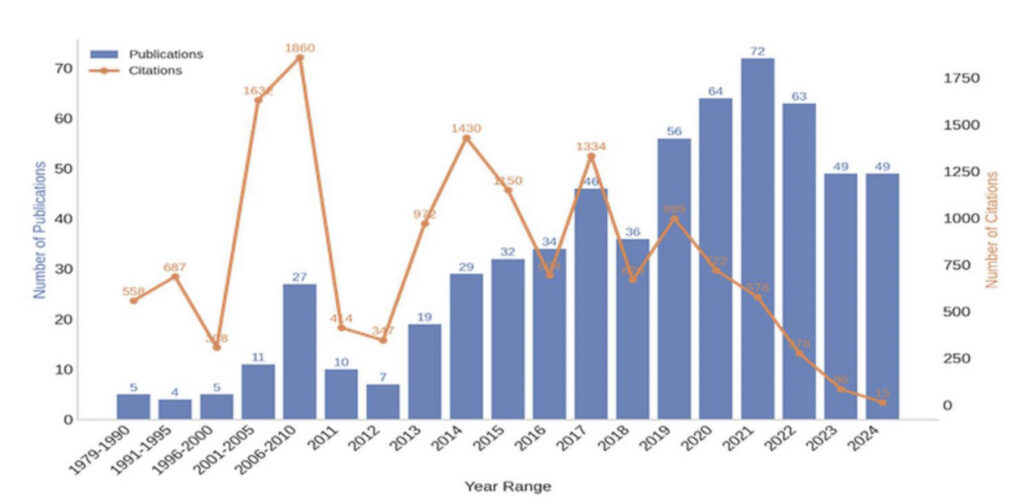
This surge in publications suggests that dry needling has moved beyond an experimental intervention and is now firmly established as an important therapeutic modality within musculoskeletal care.
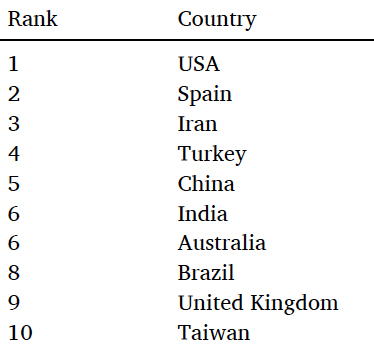
The expansion of research has also been geographically diverse. The bibliometric analyses show that the United States, Spain, and Iran have emerged as the most productive countries in dry needling research, together contributing hundreds of publications to the scientific literature.
Dry needling has become a global area of investigation. Research contributions have come from more than 40 countries, reflecting the widespread adoption of this therapeutic approach. with collaborative networks spanning universities, research institutions, and clinical organizations worldwide.
Jan Dommerholt as a Leading Contributor to Dry Needling Research
Within this expanding body of literature, certain authors have played particularly important roles in shaping the direction of research. Bibliometric studies consistently identify Jan Dommerholt as one of the most prolific and influential researchers in the fields of dry needling and myofascial pain.
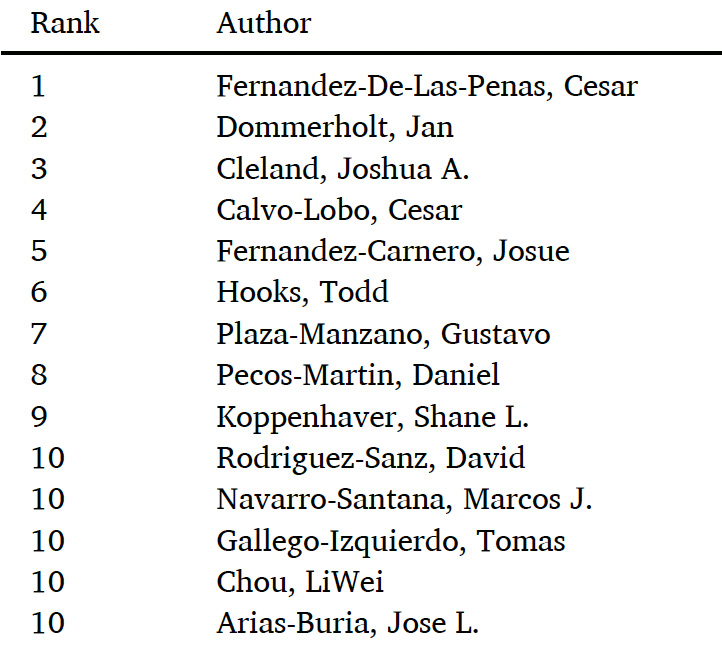
A global bibliometric analysis ranked Dommerholt as the second most productive author, with 25 publications and over 650 citations, highlighting his sustained scholarly contributions to the field.2
The most productive author was Cesar Fernández-de-las-Peñas with 48 publications and over 1,300 citations. Jan and Cesar have published several articles and textbooks together, including the world’s ranking dry needling textbook, “Dry needling; an evidenced and clinical-based approach. 3rd ed. 2026, Edinburgh: Churchill Livingstone.”
Noteworthy is that Todd Hook, Myopain Seminars instructor, was ranked in 6th place!
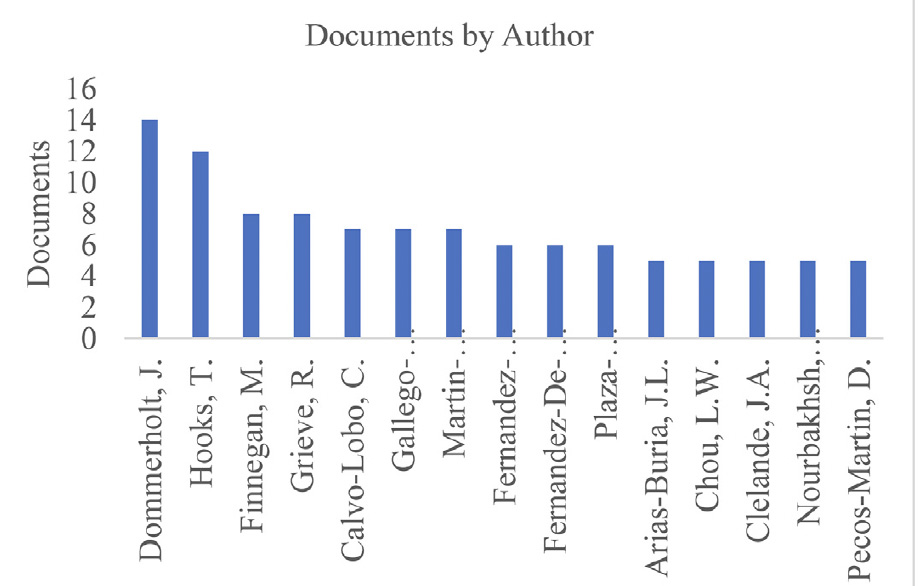
A separate bibliometric analysis focusing specifically on dry needling for neck pain further identified Dommerholt as the author with the most publications in this research area.3 Noteworthy is that the top three authors are or were Myopain Seminars instructors.
These findings demonstrate that Dommerholt has not only contributed a substantial volume of research but has also helped shape the intellectual framework of modern dry needling practice.
His work has addressed several important aspects of myofascial pain and dry needling, including:
- The pathophysiology of myofascial trigger points
- Clinical approaches to trigger point diagnosis and treatment
- Evidence-informed practice in dry needling
- The integration of dry needling into rehabilitation and pain science frameworks
Through these contributions, Dommerholt has helped bridge the gap between scientific research and clinical application. Of interest is that Dommerholt’s actual number of publications is much greater than reflected in these bibliometric studies. Many of his (open-access) papers are available on the Myopain Seminars website.
Advancing the Understanding of Myofascial Pain
A central focus of Dommerholt’s work has been the study of myofascial pain syndrome, a common but often misunderstood musculoskeletal disorder. Myofascial pain syndrome is characterized by trigger points within skeletal muscles that can generate both localized and referred sensations.
Understanding the mechanisms underlying trigger points is essential for effective treatment. Dommerholt’s research has contributed to this understanding by synthesizing existing literature and examining the physiological processes involved in trigger point formation and treatment.
Several widely cited publications co-authored by Dommerholt provide critical overviews of the myofascial pain literature, offering clinicians and researchers valuable insights into the diagnosis and management of trigger point-related pain. These comprehensive reviews have helped establish a stronger scientific foundation for dry needling, supporting its role as a therapeutic intervention grounded in modern pain science.
Collaboration and the Development of Global Research Networks
Bibliometric analyses of dry needling research confirm strong co-authorship networks, indicating that collaboration between authors, institutions, and countries has been central to the field’s development.
In addition to his individual contributions, Dommerholt has played an important role in fostering collaboration among researchers and clinicians. He has published multiple papers with researchers from many countries, including the US, Canada, Australia, Iran, Spain, the Netherlands, India, Denmark, the UK, Ireland, Switzerland, Taiwan, Qatar, Germany, and Belgium.
Such collaborative networks are essential for advancing scientific knowledge. They facilitate the sharing of ideas, the development of multicenter research studies, and the dissemination of best practices across international borders.
Institutions associated with Dommerholt’s work—including Bethesda Physiocare and Myopain Seminars—appear among the leading affiliations contributing to dry needling research. These organizations have served not only as clinical centers but also as hubs for clinical education and professional training.
Furthermore, Dommerholt is a co-founder of the International Dry Needling Education & Training Advisory Group (IDNETAG), which has members from diverse professions, including physical therapists, osteopaths, acupuncturists, and physicians, across nine countries. IDNETAG’s mission is to enhance global standards of dry needling practice, focusing on safety, education, and consistency in treatment protocols.
Through these collaborations, Dommerholt has helped create an international community of clinicians and researchers dedicated to advancing the understanding and application of dry needling.
The Role of Education in Expanding Dry Needling Practice
While scientific publications are essential for advancing knowledge, education plays an equally important role in translating research into clinical practice.
Dommerholt has been deeply involved in educational initiatives to train healthcare professionals in dry needling techniques. Through workshops, seminars, lectures at conferences, and professional training programs, he has helped disseminate knowledge to clinicians across multiple disciplines in many countries worldwide.
These educational programs have contributed to several key developments in the field:
- The standardization of dry needling techniques
- Increased awareness of myofascial pain among healthcare providers
- The integration of dry needling into rehabilitation and manual therapy practices
As a result, dry needling has gained widespread acceptance among clinicians in physical therapy, sports medicine, and pain management.
This educational influence has played a crucial role in expanding the global adoption of dry needling.
Research Trends in Specific Clinical Conditions
Dry needling research has not only increased in volume but has also expanded into specific clinical applications.
One notable area of investigation is the treatment of neck pain, which is among the most common musculoskeletal disorders worldwide. Bibliometric analyses of dry needling research related to neck pain identified 125 scientific publications from 2002 to 2022, reflecting growing interest in this clinical application.
The expansion of dry needling research reflects broader trends in healthcare. As concerns about opioid use and medication-related side effects continue to grow, clinicians and researchers are increasingly exploring non-pharmacological approaches to pain management. Dry needling fits well within this paradigm because it offers a minimally invasive treatment that can be integrated with other rehabilitation interventions, such as manual therapy and therapeutic exercise.
The bibliometric analyses suggest that dry needling research will likely continue to grow in the coming years. However, they also identify several areas requiring further investigation, such as
- Large multicenter clinical trials
- Standardized treatment protocols
- Cost-effectiveness analyses
- Increased participation from low- and middle-income countries
Addressing these research gaps will help strengthen the evidence base for dry needling and ensure its continued development as a safe and effective treatment.
Conclusion
The rapid growth of dry needling research over the past several decades reflects the increasing importance of non-pharmacological approaches to musculoskeletal pain management.
Within this evolving landscape, Jan Dommerholt has emerged as one of the most influential figures in the field. Through his extensive research contributions, international collaborations, and educational leadership, Dommerholt has helped shape the scientific understanding of myofascial pain and promote the global adoption of dry needling as a clinical intervention.
Bibliometric analyses clearly demonstrate his impact on the field, identifying him as one of the most productive and highly cited researchers in dry needling research.
As the field continues to evolve, the foundations established by Dommerholt and his collaborators will remain central to future advancements in both research and clinical practice.
Dry needling is likely to remain an important component of modern musculoskeletal rehabilitation, and the ongoing efforts of researchers, educators, and clinicians will continue to refine and expand its role in patient care.
References
1. Luo, N., et al., Bibliometric and Visual Analysis in the Field of Dry Needling for Myofascial Pain Syndrome from 2000 to 2022. J Pain Res, 2023. 16: p. 2461–2475.
2. Alhakami, A.M., et al., The Global Impact of Dry Needling Research: a Bibliometric Analysis of Myofascial Trigger Point Treatment from 1979 to 2024. Eur J Integrative Med, 2026. 82: p. 102595.
3. Kalia, V. and P. Rajput, Research Trends in Dry Needling for Neck Pain Treatment: A Bibliometric Analysis. J Chiropr Humanit, 2024. 31: p. 33–47.