
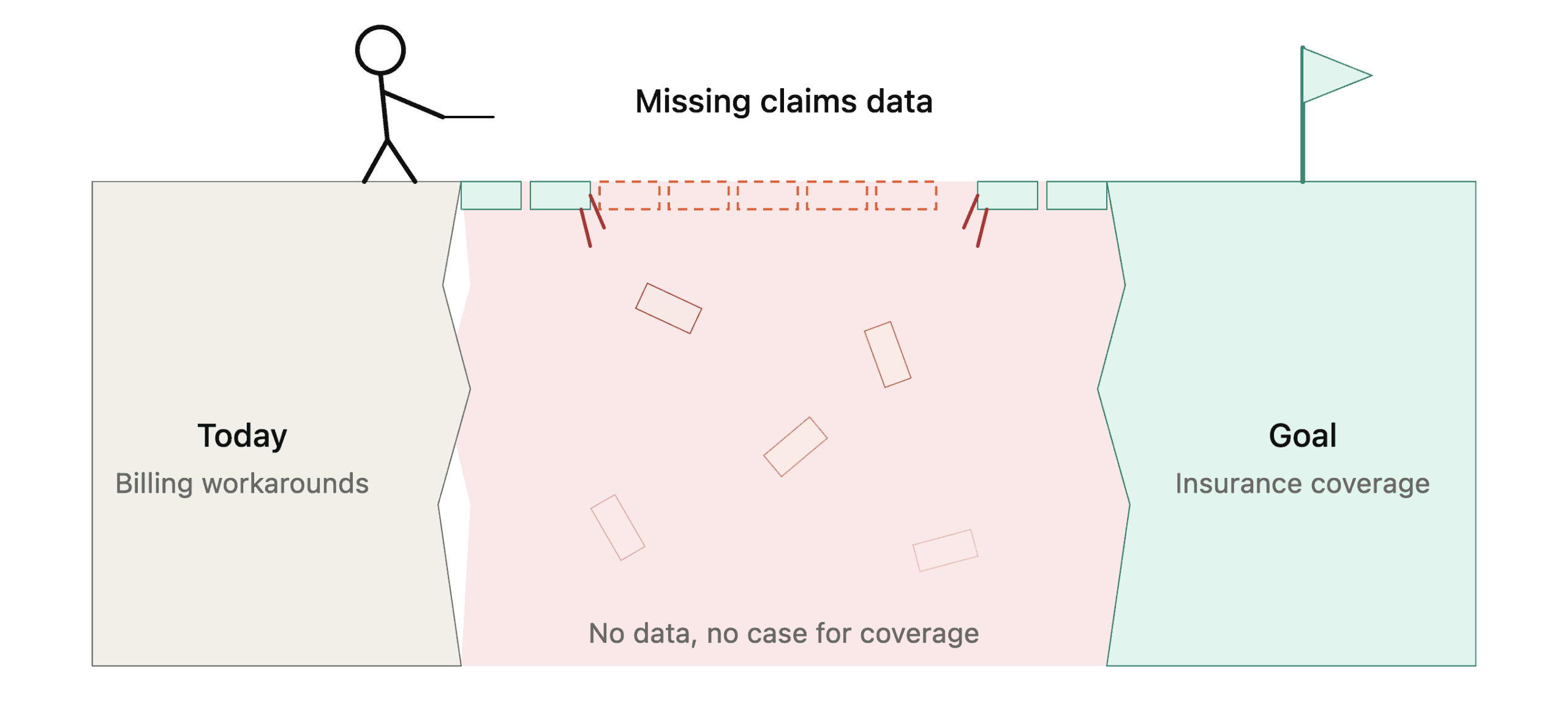
Why accurate CPT coding, professional advocacy, and better utilization data are essential to securing insurance reimbursement for dry needling.
For decades, physical therapists in the United States have fought to establish dry needling as a legitimate intervention within their professional scope of practice. In California, Hawaii, and New York, that process continues. Through legislative initiatives, regulatory challenges, scientific publications, and professional education, the profession has made remarkable progress. Yet one important battle remains unresolved: getting insurance companies to reimburse physical therapists for dry needling.
Ironically, physical therapists themselves may be contributing to the problem. Although two specific Current Procedural Terminology (CPT) codes have existed for dry needling since January 1, 2020, many clinicians appear reluctant to use them because insurers frequently deny reimbursement. Instead, some therapists may report dry needling under other, more readily reimbursed CPT codes.
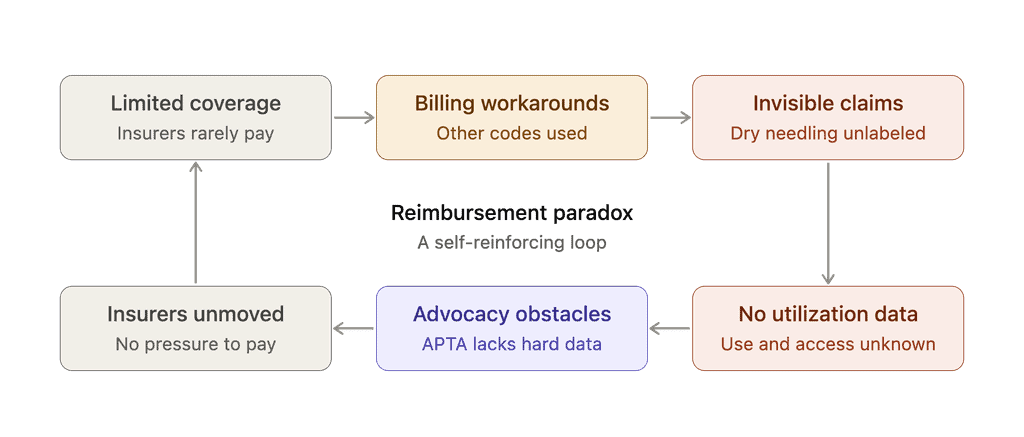
This understandable financial response creates a serious problem. When insurance claims do not accurately identify dry needling, it becomes much harder to determine how often the intervention is performed, which patients receive it, and how reimbursement policies affect access to care. Without reliable utilization data, the American Physical Therapy Association (APTA) and other professional organizations face additional obstacles when advocating for improved insurance coverage. This constitutes a reimbursement paradox: physical therapists want insurers to pay for dry needling, but the profession may not be generating the very data needed to make that argument.
Two CPT Codes That Should Have Changed Everything
In 2018, the APTA collaborated with the American Chiropractic Association (ACA) to propose two specific CPT codes for dry needling. Jan Dommerholt participated in the committee developing that proposal. The American Medical Association subsequently approved the codes, which became effective January 1, 2020.
The two codes are straightforward:
- CPT 20560: Needle insertion(s) without injection(s), 1 or 2 muscle(s).
- CPT 20561: Needle insertion(s) without injection(s), 3 or more muscle(s).
Both codes are untimed. They are based on the number of distinct muscles treated, not the number of needles inserted, needle manipulations performed, or minutes spent needling. Neither code describes injecting medication or other substances.
Creating these codes was a major achievement. For the first time, dry needling had distinct procedural codes that allowed the intervention to be identified separately from other physical therapy services. Unfortunately, obtaining CPT codes does not automatically guarantee insurance reimbursement. A CPT code identifies a service. Whether that service is covered, medically necessary, and eligible for payment depends on the payer’s policies and applicable regulations.
The Problem: Insurance Companies Still Refuse to Pay
Despite the availability of designated CPT codes, many commercial insurers continue to classify dry needling as investigational, experimental, or not medically necessary. Others offer limited coverage for particular diagnoses or clinical circumstances. Medicare presents another challenge.
Under National Coverage Determination 30.3.3, Medicare covers acupuncture for qualifying chronic low back pain under specific circumstances. However, the policy establishes provider qualifications and billing requirements that do not create a general Medicare benefit for dry needling independently performed and billed by physical therapists. Consequently, physical therapists generally cannot expect Medicare reimbursement simply because they perform dry needling and report CPT 20560 or 20561, which creates an understandable dilemma.
Physical therapists must pay their employees, cover overhead, purchase supplies, maintain professional liability insurance, and keep their practices financially viable. When an intervention is clinically indicated but not reimbursed, clinicians face difficult choices. Should they provide the service without compensation? Charge patients directly when legally permissible? Stop offering the intervention altogether? Or should they report the treatment using a different CPT code? Unfortunately, that final option raises important ethical, regulatory, and professional concerns.
When Dry Needling Becomes Manual Therapy
The APTA has historically recognized dry needling within the broader domain of manual therapy in its Guide to Physical Therapist Practice. However, recognizing dry needling as a manual therapy intervention does not mean that clinicians should automatically bill it using CPT 97140.
CPT 97140 describes manual therapy techniques, such as mobilization, manipulation, manual lymphatic drainage, and manual traction. Similarly, CPT 97112 describes neuromuscular reeducation involving movement, balance, coordination, kinesthetic sense, posture, or proprioception. Some physical therapists may be tempted to use these codes instead of CPT 20560 or 20561 because they are more likely to be reimbursed. But a fundamental difference exists between an intervention’s professional classification and its proper billing designation. An intervention does not become neuromuscular reeducation merely because the clinician intends to improve neuromuscular function. Nor does classifying dry needling as a form of manual therapy automatically justify billing it under CPT 97140, especially when specific dry needling codes are available.
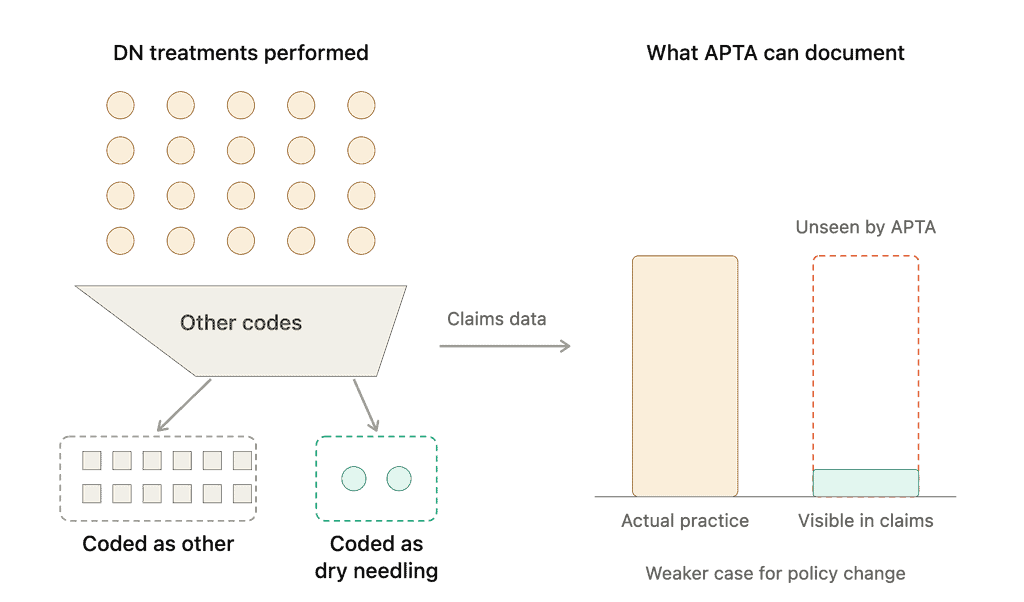
When dry needling is performed, the designated dry needling codes generally provide the appropriate procedural description, subject to payer-specific requirements. Dry needling is often combined with other interventions. A physical therapist may perform dry needling, followed by therapeutic exercise, manual therapy, or neuromuscular reeducation. When these are distinct, medically necessary, properly documented services, they may be separately reportable under applicable coding rules; however, it is not appropriate to substitute a reimbursable code for dry needling simply because the insurer will not pay for the designated procedure. Beyond potential billing compliance concerns, it makes dry needling statistically invisible.
The Missing Data Problem
Imagine that 10,000 physical therapists perform dry needling regularly, but only 2,000 consistently identify the intervention using its designated CPT codes. The remaining 8,000 therapists may provide the intervention as a noncovered service, charge patients directly, incorporate it into a broader treatment session, or report other services instead. An insurance company would see only a fraction of actual dry needling utilization, skewing its ongoing analysis of claims data used to evaluate utilization, costs, practice patterns, and healthcare expenditures. Professional associations, including the APTA, also use available claims information to develop reimbursement strategies and support policy changes.
When clinicians do not accurately identify dry needling, several important questions become difficult to answer:
- How many physical therapists perform dry needling, and how frequently?
- Which diagnoses are most commonly associated with the intervention?
- How many patients receive dry needling as part of comprehensive rehabilitation?
- What are the patterns of reimbursement, denial, and patient out-of-pocket spending?
- How does dry needling utilization relate to other healthcare services and overall treatment costs?
Claims data alone cannot establish clinical effectiveness or cost-effectiveness. Those questions require appropriately designed clinical and economic studies. Nevertheless, accurate utilization data can provide an important foundation for reimbursement advocacy. A procedure performed outside the insurance claims system may remain invisible even when it is documented correctly in the clinical record. If dry needling is invisible in the available data, it becomes harder to demonstrate its role in contemporary physical therapy practice.
The Catch-22 Facing the APTA
One of the APTA’s most important responsibilities is advocating for appropriate payment for physical therapy services. The organization has invested considerable effort in reimbursement policy, professional recognition, legislative advocacy, and developing appropriate coding mechanisms. However, obtaining codes was only the first step. The next challenge is convincing insurers that reimbursing appropriately selected dry needling interventions is clinically justified and economically reasonable, which requires several types of evidence: clinical effectiveness, safety, cost-effectiveness, patient outcomes, and real-world utilization.
If physical therapists do not consistently identify the interventions they provide, the APTA has less complete information to advocate with. The resulting paradox is obvious:
Physical therapists may avoid dry needling codes because insurance companies do not reimburse them. But incomplete coding and utilization data make it harder for the APTA to show the extent of dry needling practice and advocate for changes in reimbursement policy. The profession is caught in a cycle that may reinforce the very problem it wants to solve. Breaking that cycle requires action from both individual clinicians and professional organizations.
APTA Membership: Another Part of the Problem
The APTA reports a membership exceeding 100,000 individuals, including physical therapists, physical therapist assistants, and students. Meanwhile, the United States has approximately 312,000 practicing physical therapists. In other words, a substantial majority of practicing physical therapists are not APTA members.
An association representing a relatively small share of its profession faces challenges when trying to influence reimbursement policies that affect hundreds of thousands of clinicians. Some nonmembers argue that the APTA does not do enough to address reimbursement problems, administrative burdens, declining payment rates, and the growing financial pressures facing physical therapy practices. But the question remains, “How can we expect a professional association to fight effectively for the entire profession when so many of us choose not to support it? It is difficult to demand stronger representation while withholding the support necessary to make that representation effective.
What Physical Therapists Can Do Differently
The solution requires a coordinated approach involving clinicians, practice owners, professional associations, researchers, and payers.
- First, physical therapists should accurately report dry needling using the designated CPT codes when applicable. A lack of reimbursement does not justify misrepresenting the service provided.
- Second, practices should develop systems for tracking dry needling utilization, including noncovered services and direct patient payments. Such records may provide valuable information even when no insurance claim is submitted.
- Third, clinicians should document meaningful patient outcomes. Pain intensity, disability, functional capacity, patient-reported improvement, and treatment utilization are more persuasive than anecdotal claims of success.
- Fourth, the APTA and other professional organizations should explore opportunities to collect and analyze de-identified utilization and outcomes data from participating practices. Collaboration with researchers and practice management software companies could help establish a more accurate picture of dry needling use across the country.
- Fifth, clinicians should become more involved in professional advocacy. This includes supporting professional associations, participating in reimbursement initiatives, responding to proposed insurance policy changes, and communicating with legislators and regulatory agencies.
Accurate billing data cannot compensate for weak scientific evidence. Equally, strong scientific evidence may have limited influence on reimbursement policy if insurers lack reliable information about clinical utilization and economic impact.
Conclusion: If We Want to Be Counted, We Must Make Our Work Count
The establishment of CPT codes 20560 and 20561 was an important milestone in the professional recognition of dry needling. Yet more than six years later, these codes have not translated into widespread insurance reimbursement. The reasons are complex, involving scientific evidence, payer policies, Medicare regulations, healthcare economics, and professional advocacy. However, some physical therapists’ reluctance to use the very codes created to identify their services may be a significant contributor. When dry needling is reported under other codes, omitted from claims, or otherwise absent from available utilization databases, the profession loses valuable information.
We cannot expect the APTA to negotiate effectively without adequate evidence. We cannot expect insurers to recognize the full extent of dry needling practice when available claims data may substantially underestimate its use. And we cannot reasonably criticize the APTA for limited progress without considering our own responsibility to support collective advocacy. Nevertheless, accurate coding alone will not guarantee reimbursement. Insurers can still deny payment, and additional clinical and economic evidence will remain necessary.
Physical therapists cannot demand recognition for services that remain invisible in the systems used to evaluate healthcare delivery. If we want dry needling to become a routinely reimbursed component of physical therapy practice, we must do more than demonstrate its clinical value.
Jan Dommerholt, PT, DPT | President/CEO, Myopain Seminars
Selected References and Further Reading
- American Medical Association. Current Procedural Terminology (CPT). Codes 20560 and 20561. Effective January 1, 2020.
- Centers for Medicare & Medicaid Services. National Coverage Determination 30.3.3: Acupuncture for Chronic Lower Back Pain.
- Arias-Buría JL, Martín-Saborido C, Cleland JA, et al. Cost-effectiveness evaluation of the inclusion of dry needling into an exercise program for subacromial pain syndrome: evidence from a randomized clinical trial. Pain Med. 2018;19(12):2336–2347.
- Fernández D, Al-Boloushi Z, Bellosta-López P, Herrero P, Gómez M, Calvo S. Cost-effectiveness of two dry needling interventions for plantar heel pain: a secondary analysis of an RCT. Int J Environ Res Public Health. 2021;18(4):1777.
- Dommerholt J. Evaluating the Costs and Cost-Effectiveness of Dry Needling. Myopain Seminars.
- Dommerholt J. Dry Needling Systematic Reviews and Meta-Analyses. Myopain Seminars.