
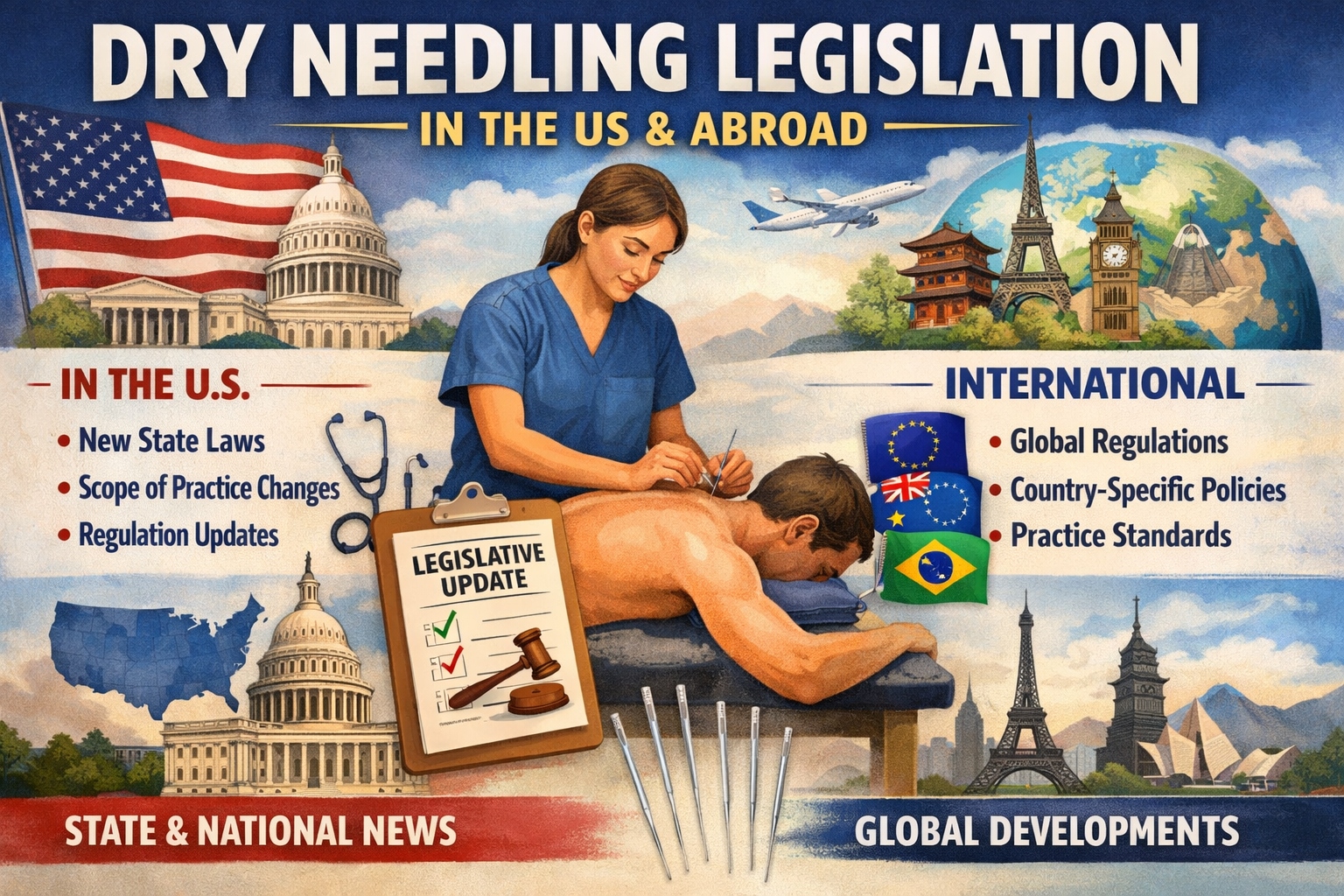
Dry Needling in New Jersey
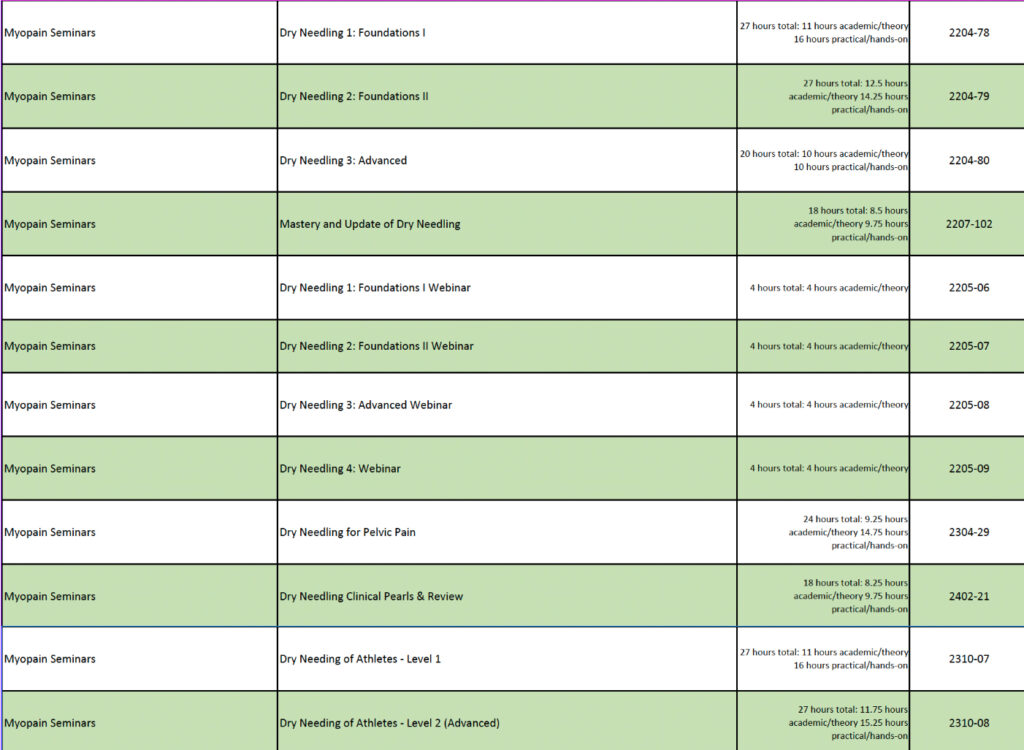
Physical therapists in New Jersey may not be aware that the New Jersey Board of Physical Therapy has approved the Myopain Seminars Dry Needling courses.
On its website, the Board features a list of approved continuing education courses, but Myopain Seminars and our dry needling courses are not included. Some PTs concluded erroneously that our courses would not be approved.
However, the Board maintains a separate list of approved dry needling courses, which includes our courses.
Dry Needling in Pennsylvania
During the 2025-2026 Pennsylvania legislative session, several bills were introduced to amend the Physical Therapy Act (The act of October 10, 1975 (P.L.383, No.110), entitled “An act relating to the practice of physical therapy).
- Twenty Representatives introduced Bill HB-1251 to expand the list of healthcare professionals who can refer patients to physical therapists to include certified nurse midwives, in addition to existing referral sources such as physicians, physician assistants, and nurse practitioners. The bill clarifies that physical therapists can accept referrals from dentists, podiatrists, and now certified nurse midwives for treatments within those professionals’ respective scopes of practice. On December 29, 2025, the Bill was referred to the Consumer Protection & Professional Licensure Committee.
- On November 25, Representatives Schlegel, Cepeda-Frytiz, and Rowe introduced Bill HB-2070, which adds dry needling to the scope of physical therapy practice. Dry needling was described as a “physical therapy intervention that uses a filiform needle to stimulate trigger points and diagnose and treat neuromuscular pain and functional movement deficits.” A licensed physical therapist may only perform dry needling upon the successful completion of a dry needling certification program approved by the board. The Bill does not include physical therapy assistants to perform dry needling. On December 3, 2025, the Bill was referred to the House Professional Licensure Committee.
Representative John Schlegel explained that Pennsylvania’s Physical Therapy Practice Act (Act 110 of 1975) does not explicitly allow or prohibit this type of therapy, creating a legal gray area and causing uncertainty among licensed physical therapists.
“Due to the current law’s silence on this treatment technique, legislative clarification is needed.”
Representative John Schlegel
When, in September 2011, the State Board of Physical Therapy of the Commonwealth of Pennsylvania issued a statement that “dry needling is not legal to perform as a physical therapist in the Commonwealth of Pennsylvania,” the President of the Pennsylvania Physical Therapy Association opposed the ruling as the PA PT Board has no legal authority to issue such advisory opinions or pre-approve conduct.
While it may seem strange that a State PT Board is not allowed to render an opinion on which approaches or techniques are within the scope of PT practice, many states have similar limitations on their Boards’ authority.
Previous efforts to include dry needling in the PT Practice Act largely failed due to the COVID pandemic. For example, in 2020, Senator Mario Scavello and colleagues introduced Senate Bill-1228, followed by a similar Senate Bill SB-485 in 2021.
MSK Ultrasound in North Carolina
In September 2025, the North Carolina Board of Physical Therapy approved a revision to the current scope of practice:
Based on the definition of physical therapy in the Practice Act G.S.§90-270.90 (4), the permitted practice section in the Board rules (21 NCAC 48C .0101), the evidence of ultrasound imaging being used in practice, and the availability of courses which teach ultrasound imaging, the Board concludes that ultrasound imaging is within the scope of physical therapy practice in North Carolina for physical therapists who have the requisite advanced training.
2026 will be another exciting year at Myopain Seminars.
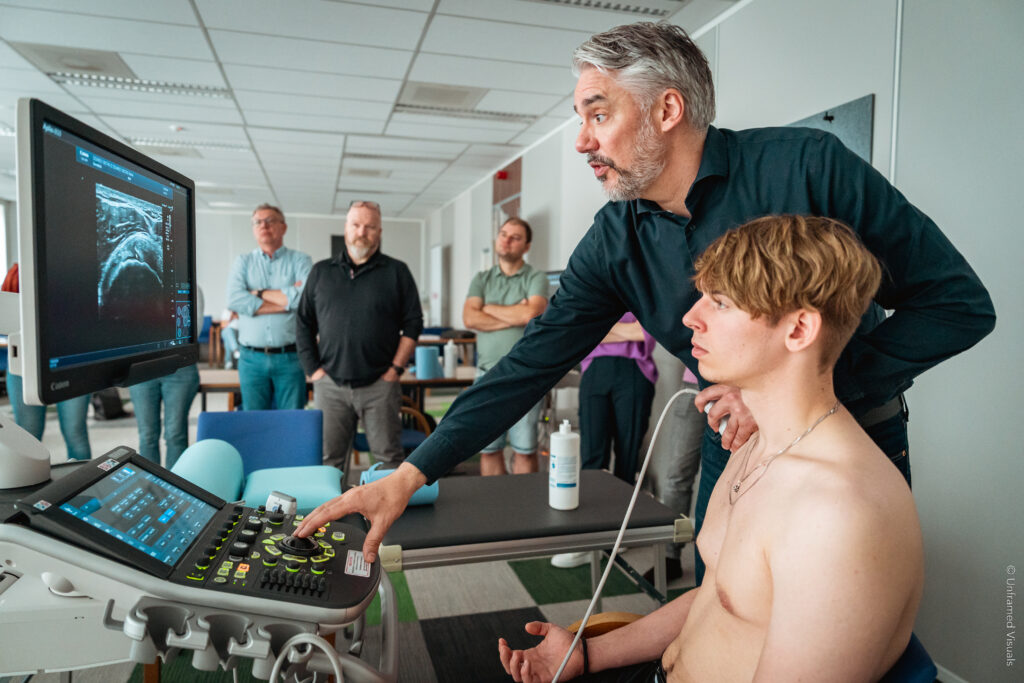
We are thrilled to add Marc Schmitz, Founder & CEO of SonoSkills, to our distinguished panel of instructors and teachers. In 2010, Marc founded SonoSkills, which has since become the premier provider of diagnostic and interventional musculoskeletal ultrasound courses to advance your career. SonoSkills has delivered courses in over 30 countries and includes a team of more than 40 expert trainers.
Myopain Seminars is honored to offer the SonoSkills foundational Musculoskeletal (MSK) Ultrasound Bootcamp courses to clinicians in the United States!
Dry Needling in Saudi Arabia
Myopain Seminars tracks all legislative updates on dry needling worldwide. Jan Dommerholt has contributed to the US, Irish, and Dutch Guidelines for Dry Needling Practice. Several years ago, he was invited by the Kuwait Ministry of Health to review its dry needling policies. He is currently an active reviewer for the Dutch Physiotherapy Council (Kwaliteitsraad Fysiotherapie), assisting the Council in defining the scope of dry needling. In this legislative update, we will review the formal Dry Needling Guidelines issued by the Saudi Ministry of Health in 2025.
The Dry Needling Guidelines in Saudi Arabia were developed to provide an evidence-based, standardized framework for the safe and effective use of dry needling (DN) by licensed physiotherapists, with no influence from external parties or organizations.
Dry needling is defined as an invasive physical therapy technique that uses a solid filament needle, without injectable substances, to treat neuromusculoskeletal pain and dysfunction, particularly myofascial trigger points.
Purpose and Scope
The primary purpose of the guidelines is to standardize DN practice across Saudi Arabia, ensuring patient safety, clinical effectiveness, and professional accountability. The document emphasizes patient-centered care, evidence-based practice, and ongoing professional development. It applies to licensed physiotherapists who have completed specialized postgraduate training in dry needling and targets patients with musculoskeletal conditions, including myofascial pain syndrome, trigger points, chronic pain, and muscle tension.
Legal and Professional Framework
Dry needling is recognized internationally as part of physical therapy practice when performed by appropriately trained clinicians. The guidelines align with international standards and confirm that DN is a postgraduate-level skill that requires additional education beyond entry-level physical therapy training. In Saudi Arabia, only physical therapists licensed by the Saudi Commission for Health Specialists (SCHS) and meeting the training requirements are permitted to perform dry needling.
Training Standards and Competencies
To practice dry needling, therapists must:
- Hold a valid physical therapy license from the SCHS
- Have at least one year of clinical experience
- Complete a structured DN training program (the guidelines state that “less than 80 hours should be dedicated to the entire learning process,” but presumably, there is a requirement of a minimum of 80 hours, including at least 40 hours of supervised clinical practice)
Training programs must include theoretical knowledge, practical skills, assessment, and examination. Core competencies include anatomy and physiology, pain science, palpation techniques, needle handling, emergency preparedness, infection control, and recognition and management of adverse events. Ongoing continuing medical education (CME) is required to maintain competence, particularly for clinicians who do not practice DN regularly.
Interestingly, the guidelines also specify ideal instructor-student ratios and even describe the number of required pillows per treatment table during dry needling courses!
In Saudi Arabia, one lecturer and one helper are required to provide high-quality dry needling training. A maximum of thirty participants should be present, with 25 being the ideal audience size.
Each bed should have a fixed or mobile table, and depending on the number of participants, each bed should have one or two sheets and one or two pillows.
From our point of view, an even number of students is preferable, but that is a minor detail.
Principles of Safe Practice
Dry needling is indicated for neuromusculoskeletal pain and movement dysfunction related to myofascial trigger points, restricted range of motion, and soft tissue limitations. Before treatment, a comprehensive patient assessment is mandatory, including medical history, medication review, and screening for contraindications.
Absolute contraindications include needle phobia, refusal or inability to consent, previous severe adverse reactions to needling, emergency medical conditions, and situations where adequate haemostasis cannot be achieved.
Relative contraindications require careful clinical judgment and include pregnancy, bleeding disorders, compromised immunity, vascular disease, diabetes, epilepsy, psychological distress, metal or latex allergies, and pediatric patients.
Adverse Events and Risk Management
The guidelines provide detailed guidance on identifying, preventing, and managing adverse events. Most adverse events are mild and transient, such as soreness, bruising, or minor bleeding. More serious but rare complications include fainting, infection, pneumothorax, nerve injury, organ penetration, and needle breakage.
Clinicians must be trained to recognize early warning signs, respond appropriately, and seek medical intervention when necessary. Accurate documentation and patient education are emphasized as critical components of risk management.
Anatomical Considerations
Dry needling carries inherent risks to vital structures, including the lungs, spinal cord, blood vessels, nerves, and internal organs. Pneumothorax is identified as the most serious potential complication, particularly when needling near the thorax, neck, or shoulder region. Thorough anatomical knowledge, correct patient positioning, and appropriate needling techniques (e.g., pincer grip) are essential to minimize risk.
Hygiene and Infection Control
Because DN is an invasive procedure, strict hygiene and infection control measures are mandatory. Only sterile, single-use, disposable needles may be used, and needles must never be reused or re-sterilized. Hand hygiene, use of personal protective equipment, proper skin preparation, safe disposal of sharps, and protocols for managing needle-stick injuries are clearly outlined.
Dry Needling During Pregnancy
DN during pregnancy should be approached with caution. The guidelines recommend avoiding DN during the first trimester and contraindicate needling in specific anatomical regions (e.g., abdomen, lumbar spine, sacrum). Thorough assessment, informed consent, and collaboration with the patient’s obstetric provider are strongly advised.
Consent and Practical Application
Written informed consent is mandatory and must be documented in Arabic and/or English. The guidelines stress clear communication with patients regarding the purpose, benefits, risks, and limitations of dry needling. DN should always be integrated into a broader rehabilitation program rather than used as a standalone intervention.
Conclusion
These guidelines establish a comprehensive, safety-focused framework that enables physical therapists in Saudi Arabia to practice dry needling responsibly and effectively. By emphasizing standardized training, patient safety, clinical reasoning, and evidence-based care, the document supports high-quality physiotherapy practice aligned with international standards.
In June 2026, Myopain Seminars will start teaching dry needling courses in Riyadh, the capital of Saudi Arabia, in partnership with Knowledge Bridge, which organizes all our courses in the Middle East.