Introduction
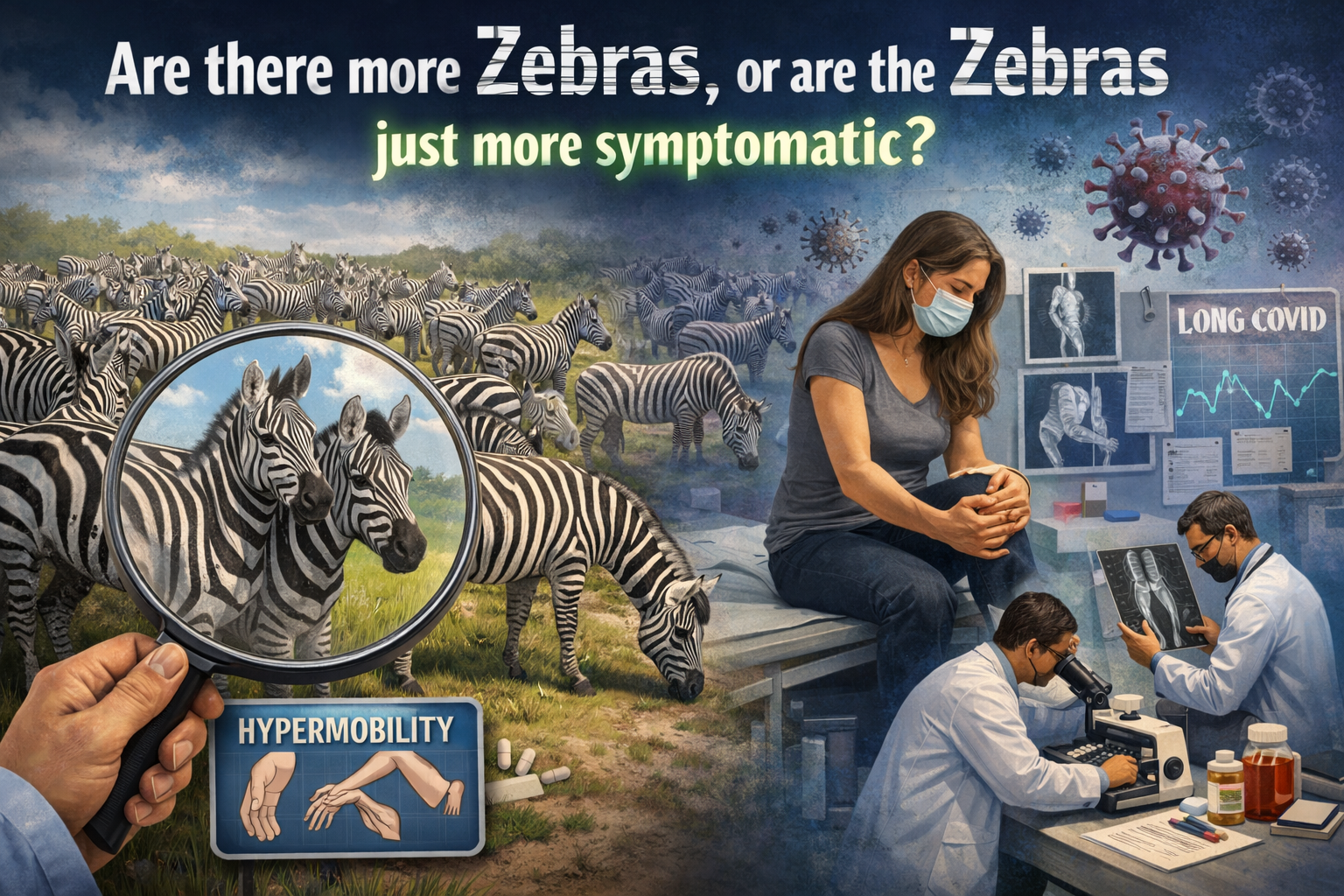
Hypermobility Spectrum Disorder (HSD) and Ehlers Danlos Syndromes (EDS) have often been referred to in the medical literature as “rare.” The International Ehlers-Danlos Society has adopted the zebra as its symbol to represent this “rare” disorder. Medical students are often taught to look for the horses (common syndromes and diagnoses), rather than the zebras. While my clinical practice has always included a higher proportion of patients with HSD and EDS, as I have a special interest in this population and identify well with them, I have observed a dramatic increase over the past few years in both the number and severity of symptoms. I have had informal conversations with colleagues and referral sources regarding these changes and decided to explore the topic further. Are there MORE patients with HSD/ EDS since the COVID-19 pandemic, or are they just more symptomatic? My findings were enlightening and validating.
While research is still evolving, early studies and clinical reports suggest significant overlap between long COVID and hypermobility-related conditions, raising important questions about how viral infections interact with connective tissue and the autonomic nervous system. A growing body of evidence indicates that joint hypermobility is more common among individuals with long COVID than in the general population.
- Studies show that hypermobility has been detected in 30–57% of patients with conditions such as ME/CFS, fibromyalgia, POTS, and long COVID, which is significantly higher than in the general population.
- A BMJ Public Health study reported that people with generalized joint hypermobility were 30% more likely to experience prolonged symptoms after COVID‑19.
- Additional research shows that individuals with generalized joint hypermobility are significantly more likely to develop chronic, long‑lasting symptoms following COVID‑19 infection.
- Case‑control studies show that both generalized and extreme hypermobility are predictive risk factors for long COVID.
These studies highlight an emerging pattern: people with pre‑existing hypermobility—diagnosed or undiagnosed—may be more vulnerable to long COVID, and COVID‑19 may unmask previously mild or hidden hypermobility conditions.
Several mechanisms have been proposed by current research:
1. Connective Tissue Vulnerability
Some researchers propose that COVID‑19 may exacerbate inflammation in connective tissues or reveal underlying connective‑tissue differences that were previously compensated for.
- Mast cell activation and inflammation may contribute to worsened hypermobility or connective‑tissue damage.
2. Autonomic Nervous System Dysfunction
Dysautonomia—including POTS—is strongly associated with both hypermobility and long COVID. Many specialists believe COVID‑19 stresses autonomic pathways that are already vulnerable in people with hypermobility. A recent study published in BMJ Public Health found that
- Loose connective tissue in veins and arteries may worsen blood pooling, contributing to POTS—often “unmasked” by COVID‑19.
3. Immune System Dysregulation
Post‑viral immune activation may cause lasting inflammation that contributes to connective‑tissue changes or worsens related symptoms. Studies show that
- Persistent inflammation in long COVID may exacerbate hypermobility symptoms or contribute to the development of HSD.
4. Severe Initial Infection Increases Risk
Another study showed that extreme hypermobility is associated not only with long COVID but with more severe acute symptoms, which themselves increase long‑term risk.
Overlapping Symptoms
Researchers and clinicians have noted many overlapping symptoms between long COVID and hypermobile EDS/hypermobility spectrum disorders (HSD). These include:
Musculoskeletal Symptoms
- Joint instability, dislocations, or subluxations
- Widespread chronic pain
- Clicking or popping joints
- Early‑onset fatigue in muscles and joints
Autonomic Nervous System Symptoms
- Dizziness or fainting, especially when standing (POTS)
- Rapid heart rate
- Heat intolerance or temperature dysregulation
These symptoms are also widely reported in long COVID patients.
Neurological and Cognitive Symptoms
- “Brain fog”
- Cognitive fatigue and slowed thinking
- Headaches or migraines
Gastrointestinal Issues
- Constipation
- Gastroparesis
- Heartburn
Fatigue and Post‑Exertional Malaise
- Chronic fatigue is one of the most common long COVID symptoms and is also prevalent in hEDS/HSD populations.
Other Multisystem Symptoms
- Bladder symptoms
- Organ prolapse
- Mitral valve prolapse
- Sleep disturbances
Importantly, in one clinical report, individuals with no history of hypermobility disorders developed persistent fatigue, dysautonomia, joint pain, and cognitive symptoms up to 15 months after COVID‑19, with all patients ultimately meeting criteria for HSD.
All of these findings should encourage clinicians to be on the lookout for signs and symptoms of long COVID as well as emerging symptoms of HSD and EDS that may be related. Patients are often mismanaged within a siloed medical system when practitioners do not make connections among multi-system involvement. Additionally, these patients may be dismissed or misdiagnosed with anxiety rather than dysautonomia and vascular pathologies. Management is multidisciplinary and may include PT, OT, primary care, and specialists in pain management, neurology, rheumatology, cardiology, vascular medicine, nutrition, and mental health, among others.
All of these findings should encourage clinicians to be on the lookout for signs and symptoms of long COVID as well as emerging symptoms of HSD and EDS that may be related. Patients are often mismanaged within a siloed medical system when practitioners do not make connections among multi-system involvement. Additionally, these patients may be dismissed or misdiagnoses with anxiety rather than dysautonomia and vascular pathologies. Management is multidisciplinary and may include PT, OT, primary care, and specialists in pain management, neurology, rheumatology, cardiology, vascular medicine, nutrition, and mental health, among others.
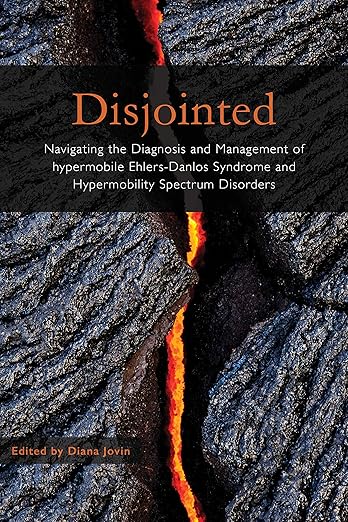
Interested in learning more about EDS and HSD? I have found the book “Disjointed” to be an excellent resource for both clinicians and patients and recommend it frequently, as it can be very validating for patients to put the pieces together.